ʻAloʻahia

Emotional Stress

I don’t choose these words randomly. Every post is a post that is considered based on what is happening in the world, but more often than not, in my life. And right now it is self imposed ʻALOʻAHIA. And I say self imposed because that really is what stress is. You don’t have to be all crazy about something that may be going on in your life. The stress really does NOTHING (at least for me) to make it any better. You can choose to leave it behind. But no. We wallow in it. And a lot of times, when all is said and done, we realize that we stressed for nothing. I hope so.

If you look in the Hawaiian dictionary, you will not find an equivalent for the stress we commonly experience. There is stress as in accent or to put emphasis on kind of stress. But not that weighed down all consuming take over your life stress. Nope. You have to look in the “modern” dictionary, Māmaka Kaiao. That book has some made up words and some traditional words that you might not find in the Pukui or Andrews dictionary.

ʻAloʻahia is your go to word for stress. Pīhoihoi is sometimes used to refer to anxiety (a bit of stress in that, right?) but it also has a joyful kind of excitement meaning, too. All in context. Or some may use “piʻi ka hopohopo” or the anxiousness/doubt is rising.

Nui ka ʻaloʻahia i kēia pule – There is a lot of stress this week.

ʻAʻole pono e ʻaloʻahia, e nanea – [You] don’t have to stress, relax!!

Copyright: 2017 – Liana Iaea Honda. All rights reserved. All versions of “He Momi e Lei ai”, in its entirety, past and present, is the property of L. K. I. Honda. Reproduction and use of any kind other than the sharing of this website is prohibited without written consent. Alteration to the original content in any form is prohibited in every and any instance, and use in any other variant is prohibited without written consent of the author. Address inquiries to: hemomi [at] gmail.com. Definitions and wise sayings are from: Hawaiian Dictionary by Pukui and Elbert, 1986. ʻŌlelo Noʻeau – Hawaiian Proverbs & Poetical Sayings by Mary Kawena Pukui, 1983.

Posted in Uncategorized | Leave a comment

ʻAlu

ʻalu

vi. Depression, gutter, ravine; lines of the hand, loose skin over the eyeball; tuck in a garment, shirring, ruffling; descent, as of trail or road; of low rank (Kep. 125); to bend, duck, hang, sag, slacken, stoop; to relax; to ruff, as a mat.

ʻAlu is not to be confused with alu. What? Okay. Maybe if I write it like this: Ke alu vs. Ka ʻalu. One is a stative verb (alu) and one is an intransitive verb (ʻalu). I know. You don’t even want to know. Just remember that one has an ʻokina before it and that one means gutter or ravine or to sag or slacken. And the other (alu) means to work together and cooperate. Okay put that aside. And if you see me in passing and still don’t understand, maybe we can have a short language lesson.

But I bet you know kī hōʻalu! Slack key. Oh yeah. You love Hawaiian music, right? And you swoon at the lovely sounds of Sonny Lim, ʻae? And maybe some Willy K? Oh my. Makes me close my eyes just talking about it. Kī hōʻalu translates as slack (hōʻalu = to cause slacking or sagging) key (kī). Fancy right? to slack the keys which is what happens when you play slack key guitar. You slack a couple of the strings and then beauty commences. Did you also know that kī hōʻalu originated in Hawaiʻi? Another crowning glory of our islands. And look, just like surfing and steel guitar, everybody like jump on the bandwagon. JUMP EVERYBODY. We share beauty with all.

Speaking of beauty, here are two of my favorite kanaka hoʻokani kī hōʻalu – favorite slack key guitar musician Hawaiians – Cyril Pahinui and Sonny Lim (Waimea’s own!!!).

You may be familiar with the term, ʻaluʻalu. Loose, flabby; misshapen, as a premature baby; slack, as a rope; to sag; wrinkled, uneven, rough, lined; foetus; skin, rind, peel. When your clothes is all baggy or wrinkled, stay all ʻaluʻalu. GO CHANGE EM!

No Kaʻaluʻalu nō hoʻi kūpuna – Naturally, when the ancestors hailed from Kaʻaluʻalu. (A play on ʻaluʻalu. Said of any person whose clothes do not fit properly or whose bundles are not secure. Kaʻaluʻalu is located in Kaʻū. )

Copyright: 2017 – Liana Iaea Honda. All rights reserved. All versions of “He Momi e Lei ai”, in its entirety, past and present, is the property of L. K. I. Honda. Reproduction and use of any kind other than the sharing of this website is prohibited without written consent. Alteration to the original content in any form is prohibited in every and any instance, and use in any other variant is prohibited without written consent of the author. Address inquiries to: hemomi [at] gmail.com. Definitions and wise sayings are from: Hawaiian Dictionary by Pukui and Elbert, 1986. ʻŌlelo Noʻeau – Hawaiian Proverbs & Poetical Sayings by Mary Kawena Pukui, 1983.
Posted in Uncategorized | Leave a comment

Poʻalima

Friday

Plain and SIMPLE. Used to be, back in the day, Poʻalima was written Pōʻalima. Kahakō over the o because means night. And really, Friday starts at 12:01 am. Still out there. But no one pronounces it that way. And a person who doesn’t speak Hawaiian and yet sees it spelled Pōʻalima may over exaggerate the part and, well, it just ain’t right.

ʻAlima is the word for five. You probably hear the number five being said as ʻelima because when we learn to count nowadays we tend to use the ʻe instead of the ʻa, but ʻa is as much the prefixer (not sure if that is the right word for it) as ʻe. And so – Poʻalima – fifth pō. Fifth night. FRIYAY!!!

You realize that all the Hawaiian days of the week are post Capt. Cook’s arrive, right? Hawaiians didn’t follow the Gregorian calendar. NO NEED. We have the MOON!! No need if you have the moon. And no need if you don’t have a 9 to 5 job. EVERYDAY YOU WORK if you are growing your own food and fishing and making your own clothing and building your own house and carving you own… okay. You get the point. Yes another western way of operating your life imposed upon an indigenous culture…if you know the cycles of the moon and the seasons here in Hawaiʻi you know what needs to be done when and why and how and you act accordingly. But no. Now we gotta know Monday through Poʻalima, Ianuali to Kekemapa, 9 am to 5 pm. Auē. Take me back take me back, back to da kine…

Hauʻoli Poʻalima, gang!!! HAPPY FRIDAY!

It’s Aloha Friday, no work til TUESDAY! No work til Poʻalua!! Second night. We all get to enjoy a day off on Poʻakahi (first night) in celebration of Kūhiō Day. No school. No state or county work. YASSS!!!! Well yes for us in Hawaiʻi. All you poʻe living elsewhere, go work! Go school. We no need.

Enjoy kākou!

Posted in Uncategorized | 3 Comments

Hoʻohihi

To cause entanglement; to entwine, entangle. To take a fancy to, admire greatly, be enraptured with. 

You know when you are young (well, when you are old, too, I suppose) and you take a fancy to someone?  That is hoʻohihi.  You just cannot think of anything else, no can eat, no can sleep, all dizzy, hard to concentrate on school or work.  That is hoʻohihi.

The word hihi, by itself, means entangled or intertwined, web or snare.  And isn’t that a good description of what happens when you are in the state of hoʻohihi-ness? You are so enraptured by this other person it is as if you are tangled in a web.  No hope for escape!

Hoʻohihi is a time when there is no appetite. Your body is FULL of love (or shall I say lust?). As soon as that stage is over, then it is ALL ABOUT THE FOOD. Haha. Totally worth it, though, right? When you find that special someone.

LANGUAGE LESSON

Hoʻohihi nā manu o ke kuahiwi – the birds of the forest are attracted here. (From the mele, Kimo Hula, by Helen Desha Beamer.)

Hoʻohihi ka manaʻo i ka nani o Kahana – The mind is entranced with the beauty of Kahana.

Hoʻohihi ʻo ia ala iā ia nei – He (over there) is so enraptured with her (over here).

Hoʻohihi au iā ʻoe – I have a great deal of admiration for you.

Mokihana onaona o Muanahina, lei hoʻohihi a ka malihini – The fragrant mokihana berries of Maunahina, lei in which visitors delight.

Copyright: 2017 – Liana Iaea Honda. All rights reserved. All versions of “He Momi e Lei ai”, in its entirety, past and present, is the property of L. K. I. Honda. Reproduction and use of any kind other than the sharing of this website is prohibited. Alteration to the original content in any form is prohibited in every and any instance, and use in any other variant is prohibited without written consent of the author. Adress inquiries to: hemomi [at] gmail.com. Definitions and wise sayings are from: Hawaiian Dictionary by Pukui and Elbert, 1986. ʻŌlelo Noʻeau – Hawaiian Proverbs & Poetical Sayings by Mary Kawena Pukui, 1983.

Posted in Uncategorized | Leave a comment

Puʻu

1. n. Any kind of a protuberance from a pimple (puʻu 2) to a hill: hill, peak, cone, hump, mound, bulge, heap, pile, portion, bulk, mass, quantity, clot, bunch, knob; heaped, piled, lumped, bulging; pregnant; to pucker. Fig., obstacle, burden, problem, discomfort, trouble, sorrow. 

There are 17 different meanings for the word puʻu. So as not to overwhelm you, I will stick to this ONE. And perhaps cover a few of the others in future Momi. Puʻu refers mostly to any kind of a bulge or hill like shape, from a pimple to a hill. And if you are like me, there have been times that the pimple on your face feels like it is as big as a hill. Poetically, a puʻu symbolizes sorry or an obstacle. Makes sense, right? Anytime you traverse up a puʻu, it takes a lot of effort. It isn’t fun. It takes it toll on your body. Thus the discomfort.

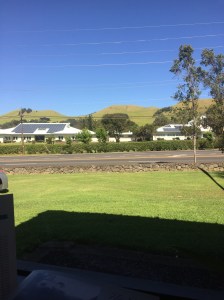
Everyday at work, I gaze out at three puʻu in beautiful Waimea. It didn’t take long before I had to track down the names of these puʻu because, you know, to Hawaiians, they are not just puʻu. They aren’t just any ole kine protuberance – not these. So I went to my place names book. Her name is Kuʻulei Keakealani. It is always nice to “phone a friend” or in this case, text a friend. I had a feeling Kuʻulei would know the names or at least know where to find them short of doing the big map search. I sent her the photograph –IMG_5355

And sure enough, she came back with a reply, left to right: Hokuula, Oaoaka, and Puʻuki (ʻokina and kahako not inserted until I get a better idea of their meanings). And so now my quest is to get more information about these puʻu. How did they get their names? Whose land is it? There is always a moʻolelo, or story, surrounding our puʻu.

Is there a puʻu near your home? There are so many in Hawaiʻi that are well known:

Puʻuanahulu – “ten day” hill

Puʻuwaʻawaʻa – furrowed hill

Puʻukapu – sacred hill

Puʻukukui – candlenut hill (on Maui)

Puʻuloa – Long Hill (name of what we now call Pearl harbor).

Not to be confused with Makapuʻu, or bulging eye.

Enjoy these ʻōlelo noʻeau:

Aia a puʻu nui i ke alo – A big hill stands right before him. (He has a problem.)

ʻAi a puʻu ka nuku – Eat till the lips protrude (Eat until one can take no more.)

ʻAʻohe puʻu, ʻaʻohe keʻe – No humps, no bends. (Said of a person who is physically perfect.)

ʻAʻohe puʻu kiʻekiʻe ke hoʻāʻo ʻia e piʻi – No cliff is so tall that it cannot be scaled. (No problem is too great when one tries hard to solve it.)

Go find out the names of the puʻu near you. And while you are at it, find out about its history. And if you know anything  more about Hokuula, Oaoaka, and Puʻuki, comment below!

Copyright: 2017 – Liana Iaea Honda. All rights reserved. All versions of “He Momi e Lei ai”, in its entirety, past and present, is the property of L. K. I. Honda. Reproduction and use of any kind other than the sharing of this website is prohibited without written consent. Alteration to the original content in any form is prohibited in every and any instance, and use in any other variant is prohibited without written consent of the author. Address inquiries to: hemomi [at] gmail.com. Definitions and wise sayings are from: Hawaiian Dictionary by Pukui and Elbert, 1986. ʻŌlelo Noʻeau – Hawaiian Proverbs & Poetical Sayings by Mary Kawena Pukui, 1983.

Posted in Uncategorized | Tagged | Leave a comment

Lālā

1. nvi. Branch, limb, bough, coconut frond; timber, as of outrigger boom or float; wing of an army; to branch out, form branches, diverge.  2. n. Member, as of a society. 3. n. Term in fractions. 4. n. Slip, as of hibiscus. 5. n. Sweet potato produced on a branch vine. 6. n. Barb or hook, as of bone or coconut shell, on a mother-of-pearl lure; bone point of a composite hook. 7. n. Fins. 

Lālā has several meanings, but more often than not it means branch, not only referring to branches of a tree or plant but also branches of an organization or group.

If you take a look at all of the meanings above, they are all related to one another, all the way down to number 7. Fins. The most commonly used word for fin is kualā – back fin. Think of the fin as a branch on the back of a fish. Clever, right?

I had the privilege of sharing an ʻōlelo noʻeau with staff this week:

I ulu nō ka lālā i ke kumu

The branches grow because of the trunk, or kumuKumu also means source or teacher.

As parents, our keiki flourish because of the support that we give to them, much like a branch flourishes because of the nourishment it receives from the trunk. Hula dancers (ʻōlapa) flourish because of their kumu hula, or hula teacher. Good people and good places grow and flourish because of their source/teacher/trunk/stable person/people in their lives.

Organizations such as Queen’s Health System, Kamehameha Schools, Liliʻuokalani Trust, Kapiʻolani Medical Center For Women and Children , Lunalilo Home, exist because our aliʻi were so forward thinking and took their kuleana so seriously. They each served the Hawaiian people and the residents of Hawaiʻi during their lifetimes but also made sure that kanaka would be cared for after they were gone. I am in awe whenever I think about it. Each loved the kanaka maoli so much that they set aside their lands and their money to benefit Hawaiians and the people of Hawaiʻi, especially those who could not care for themselves.

If you work for one of these organizations, your aliʻi is the kumu and you are part of the legacy. Your organization is the lālā of the aliʻi it serves and you are the lālā of your organization AND your aliʻi. You got the double whammy stroke of luck. You flourish, and as a result your ʻohana flourishes. More importantly, your organization grows and flourishes because of your hard work and dedication and the kuleana you take on everyday. And thus the legacy continues. You are where you are because of your KUMU. Your tree trunk. Your source. Your teacher.

And if you have benefitted from the aloha and care of any or all of these aliʻi, you are also a lālā. Serve them well. Flourish. Grow. And leave a lasting legacy much like our aliʻi.

Copyright: 2017 – Liana Iaea Honda. All rights reserved. All versions of “He Momi e Lei ai”, in its entirety, past and present, is the property of L. K. I. Honda. Reproduction and use of any kind other than the sharing of this website is prohibited without written consent. Alteration to the original content in any form is prohibited in every and any instance, and use in any other variant is prohibited without written consent of the author. Address inquiries to: hemomi [at] gmail.com. Definitions and wise sayings are from: Hawaiian Dictionary by Pukui and Elbert, 1986. ʻŌlelo Noʻeau – Hawaiian Proverbs & Poetical Sayings by Mary Kawena Pukui, 1983.

Posted in Uncategorized | 1 Comment

Hīmeni

nvt. Hymn, any song not used for hulas; to sing a hīmeni. Eng. Hīmeni wae, selected hymn or anthem. Ā hīmeni aku ka poʻe hīmeni (2 Oihn. 29.28), the singers sang.

Merriam-Webster defines a hymn as a song of praise to God as well as a song of praise or joy. 

There are basically two Hawaiian words (there are a couple more but less used) that refer to song (noun) and to sing (verb): Hīmeni and mele. Hīmeni is a more modern term as it is derived from the English term, hymn. Typically, a hīmeni refers to a song you may sing in church such as (here are some of my favorites): ʻEkolu Mea Nui, Iesū nō ke Kahuhipa, Hoe a Mau.  If hīmeni of this variety is your thing, you need to add Nā Hīmeni Haipule Hawaiʻi (by Aunty Martha Hohu who was THE BEST organist at Kaumakapili. EVER!) to your book collection. This is THE must have book on Hīmeni.

Hīmeni has evolved from those “beginning” days (probably soon after the missionaries arrived in 1820) to refer to a broader range of  songs or to sing songs of joy and praise.

This Friday is the Hoʻokūkū Hīmeni – Song Contest – for Kamehameha Schools Kapālama. For sure, an exciting time for the students and their ʻohana. So many fond memories of this hoʻokūkū (competition). I am looking forward to hearing He ʻOno (mahalo to Bina Mossman for all of her beautiful mele that will be sung by all the classes) being sung by the senior men. When I was a freshman, we sung He ʻOno and, of course, we thought we would win. And we didn’t. But still we were GOOD. The theme is Naʻu e Lei and all songs are compositions of Bina Mossman such as, Niu Haohao, Stevedore Hula, and Laelae. I can’t wait.

E hīmeni kākou iā Hoʻonani – Let’s sing Hoʻonani.

He nahenahe ka hīmeni ʻo Ua Mau – The hymn Ua Mau is so beautiful.

ʻŌlelo Noʻeau

ʻAʻohe i maneʻo iho ke kumu pepeiao i kāu hīmeni – Even the base of the ear isn’t tickled by your song (A rude remark to one whose song or story is not appealing.)

Copyright: 2017 – Liana Iaea Honda. All rights reserved. All versions of “He Momi e Lei ai”, in its entirety, past and present, is the property of L. K. I. Honda. Reproduction and use of any kind other than the sharing of this website is prohibited without written consent. Alteration to the original content in any form is prohibited in every and any instance, and use in any other variant is prohibited without written consent of the author. Address inquiries to: hemomi [at] gmail.com. Definitions and wise sayings are from: Hawaiian Dictionary by Pukui and Elbert, 1986. ʻŌlelo Noʻeau – Hawaiian Proverbs & Poetical Sayings by Mary Kawena Pukui, 1983.

Posted in Uncategorized | Leave a comment

Pupuka

vs. Ugly, unsightly, unseemly, unattractive, homely, wicked

Downright ugliness. Now I don’t know that I equate being ugly with that homely look, but I suppose for some people that may be the case.

Andrews and Parker Dictionary have a few more interpretations for pupuka – s. An epithet of reproach, signifying good for nothing. Or full of holes (as in pukapuka).

That takes ugliness to a different level, beyond someone’s looks.Can you see how being good for nothing is pupuka? Being rude is also a form of pupuka. You have an encounter with someone who just is UGLY on the inside. All the makeup and fancy clothes will do NOTHING for this person. They still pupuka. Ugh. Hate those encounters. Why you gotta be a hater? Love makes the world go round. Not pupuka action.

One important Hawaiian tradition to note is the custom of referring to a baby as “pupuka” rather than remarking on how cute the little one is. As hard as it may be not to tell the new mom how beautiful her infant is, you must say the baby is pupuka.Why is that? There are many written accounts but I will let you read this excerpt below, a quote from a kupuna in East Maui:

ʻAe. According to what my tūtū said, “Ka poʻe wā kahiko, mamua, aʻole hiki iā ʻoe ke ʻōlelo inā hānau mai ʻoe keiki, ʻhandsome.ʻ” Aʻole hiki iā ʻoe ke ʻōlelo, “O, uʻi maoli nō kēia kaikamahine…” I said “Pehea ka walaʻau ʻana?” “ʻŌlelo mai ʻoe, ʻpupuka.ʻ” I say, “Why you say pupuka?” She said, “If you say handsome, they going to die.”

(Yes. According to what my grandparent said, “the people of old, before, you couldn’t say, when they had a baby, ʻhandsome.ʻ You couldn’t say, “oh, this girl is so beautiful”…I said “what do you say?” “You say, Pupuka.” ) from Volume II Wai o ke Ola: He Wahi Moʻolelo no Maui Hiking.

The belief was that if you referred to a baby as beautiful handsome or beautiful then someone, either human or spirit, would be jealous and take your baby from you.

Yup. True story. I recall my grandma doing this with all my pēpē when she would come to visit me, carrying the big pot of pig’s feet soup for me to eat postpartum. Everyday. For a full week.

You won’t hear me saying a little one is cutie patootie. Not verbally or in print/text/post. Always pupuka.

Last week, the world welcomed this little pupuka that was born in Waimea. Pupuka, right?

FullSizeRender.jpg

Here are a few ʻōlelo noʻeau to share more insight about pupuka:

Pupuka auaneʻi, he inoa ʻala – Homely he may be, but his name is fragrant. (said of one who bears an honorable name)

Puhipuhi lāʻau a kahuna, ka maunu loaʻa a ka pupuka – By blowing the medicine given by a kahuna, can the ugly gain his desire. (Said of one who resorted to the prayers and ceremonies of a kahuna hana aloha to gain the love of his desired one. The person consulting the kahuna ate pilimai and manulele sugar cane after the kahuna had dedicated them to Makanikeoe, the love god. Then he blew in the direction of the desired person. The god, who also had a wind form, bore the mana along, and when it touched the one desired he or she became very much in love with the sender. When used with evil intent–for revenge or to humiliate–the sender is spoken of as an ugly person who has no charm of his own, hence hems resort to sorcery.)

Last one which is one of my favorite ʻōlelo noʻeau:

Na ka pupuka ka lili – Jealousy belongs to the ugly.

#boom

Copyright: 2017 – Liana Iaea Honda. All rights reserved. All versions of “He Momi e Lei ai”, in its entirety, past and present, is the property of L. K. I. Honda. Reproduction and use of any kind other than the sharing of this website is prohibited without written consent. Alteration to the original content in any form is prohibited in every and any instance, and use in any other variant is prohibited without written consent of the author. Address inquiries to: hemomi [at] gmail.com. Definitions and wise sayings are from: Hawaiian Dictionary by Pukui and Elbert, 1986. ʻŌlelo Noʻeau – Hawaiian Proverbs & Poetical Sayings by Mary Kawena Pukui, 1983.
Posted in Uncategorized | Leave a comment

Ola (last one)

nvs. Life, health, well-being, living, livelihood, means of support, salvation; alive, living; curable, spared, recovered; healed; to live; to spare, save, heal, grant life, survive, thrive. 

E pule wale nō i ka lā o ka make, ʻaʻole e ola.

Prayers uttered on the day of the death will not save one.

This was uttered by Lohiʻau to Hiʻiaka. If you know the moʻolelo (story) of Pele and Hiʻiaka, Pele sent Hiʻiaka  on a mission to fetch her dream lover, Lohiʻau. She traveled all the way from Halemaʻumaʻu to Hāʻena, only to find him dead when she arrived. She revived him (because you know women are THAT powerful, especially of the Pele clan) and brought him ALL the way to Hawaiʻi Island. To Pele. Only to have Pele kill him. He may have deserved it but I’m not gonna judge.

The gist of the ʻōlelo noʻeau – don’t procrastinate. Waiting until the last minute to pray pray pray is not going to save your life. It will not help you accomplish your goal. You want something done? You have got to work on it, day by day, until you reach your goal. You want to get the most of your OLA, your life. Go ahead. Look at the translation again for ola (right at the beginning of this post). Your goal is life, health, well-being. You want to be healed of all that ails you.

Can you tell I am now working for a health organization? YES! Dream job. I have always been passionate about health. And now it gets to be my life’s work, not only personally but also professionally!

So today’s post is really about being proactive in reaching your health goals, mostly through eating well (read into this: whole foods, plants based) and keeping your body and brain active through regular exercise. And then when something is wrong (and you know what I am talking about), don’t wait until the last minute to do something about it. Empower yourself. Do it now! I always think to myself in these instances, what would I want my mom or my own children to do? And then I do that.

On this Aloha Poʻalima, I wish you OLA (my last day focusing on this momi). As a Hawaiian, I take this gift of life very seriously. I struggle in some areas to maintain a healthy lifestyle. It is NOT easy. And so I educate myself, knowing that each little thing I  learn may help improve my quality of life and then I try to reign in family and friends to join me in my efforts to be healthy. It truly is a kākou thing. Won’t you join me?

E ola koa – Life like a koa tree. Reach high. Be strong. Live long.

What are you working on to improve your quality of OLA? Leave a comment below.


Posted in Uncategorized | 2 Comments

Ola

nvs. Life, health, well-being, living, livelihood, means of support, salvation; alive, living; curable, spared, recovered; healed; to live; to spare, save, heal, grant life, survive, thrive.

I ola nō ke kino i ka māʻona o ka ʻōpū – The body enjoys health when the stomach is well filled.

I went to an event last month. There was food. Delicious food. And it sat there for at least a couple hours, beckoning ever so silently, to those who had gathered. Some couldn’t even wait. At the first break, several took it upon themselves to at least make a plate for their keiki.

Now I am the first to admit that I am food obsessed. I live for an opportunity to work in my kitchen. I revel in a William Sonoma store and Kitchenaid attachments. So I realize that my obsession with food is a bit more intense than the normal human being. But in my upbringing and in gatherings that I frequent, if there is food, you feed the people. QUICKLY. Or they sit there. Wondering when the food line will open.

IS THIS NOT TRUE?

You go to a paʻina and more often than not, there is a pūpū line so you can be satisfied until lunch or dinner is served. Pololei? Correct?

Lots of ʻōlelo noʻeau speak to the power of food.

Aia ke ola i ka inu o ka lio – Life is where the horse’s nose points (The scent of food leads one toward sustenance.)

ʻAi manu Koʻolau – Eat of the birds of Koʻolau (Said of a feast where delicious foods are eaten.)

He māʻona ʻai a he māʻona iʻa ko ka noanoa – The commoner is satisfied with food and fish (The commoner has no greater ambition than success in farming and fishing.)

Here is the one that makes hits the ball home:

I kani ko ʻaka i ka leʻaleʻa; i puʻu ko nuku i ka huhū; i leʻa ka nohona i ka māʻona – One laughs when joyous; sulks when angry; lives a happy existence when the stomach is satisfied with food.

When you have an event where food will be served, serve it up first. Your guests will be at peace. And when that food is nutrient dense (think lots of greens, poi, limu-seaweed, ʻuala-sweet potato), you are being proactive in promoting OLA – well-being and good health.

What is your favorite meaʻai (food)?

How do you promote OLA through food?

Do you have a similar moʻolelo (story) about food at an event?

Copyright: 2017 – Liana Iaea Honda. All rights reserved. All versions of “He Momi e Lei ai”, in its entirety, past and present, is the property of L. K. I. Honda. Reproduction and use of any kind other than the sharing of this website is prohibited without written consent. Alteration to the original content in any form is prohibited in every and any instance, and use in any other variant is prohibited without written consent of the author. Adress inquiries to: hemomi [at] gmail.com. Definitions and wise sayings are from: Hawaiian Dictionary by Pukui and Elbert, 1986. ʻŌlelo Noʻeau – Hawaiian Proverbs & Poetical Sayings by Mary Kawena Pukui, 1983.

Posted in Uncategorized | Leave a comment