Lāʻau Kalikimaka


Christmas Tree

Okay I am posting these words in hopes that it will get me in the spirit. How about you?

In the past, we cut down our own homegrown norfolk pine lāʻau kalikimaka. It was so depressing to purchase one for an excessive amount of money that came from the mainland, complete with snakes and spiders and other invasive creatures. All that fossil fuel for something that would be disposed of once 12/26 rolled around. And on top of that, have it drop its fragrant pine needles and become a fire hazard in the comforts of my living room. But I digress…

Lāʻau is the generic word for plant, wood or tree. You might also see or hear kumulāʻau kalikimaka or even kumu kalikimaka, all meaning the same thing: Christmas tree. No matter how you say it, it is all good. All in the Christmas spirit.

Speaking of lāʻau kalikimaka, here is a bit of trivia. Did you know that David Douglas, the namesake for the Douglas firs, died in 1834 under mysterious circumstances in the Hakalau National Wildlife Refuge on the island of Hawaiʻi? He was a young 35 when he died, having reportedly fallen into a pit trap. There is a monument erected in his honor that I visited in Hakalau a few years ago. Finding it was a bit easier than finding the pit into which he presumably fell. There are several Douglas firs that guard the monument.

What do you use for your lāʻau kalikimaka?

Ke kū nei ka lā’au kalikimaka i waho no ka manaw a- The Christmas tree is standing outside for now.

E hoʻonaninani kākou i ka lāʻau Kalikimaka– Let’s decorate the Christmas tree.

hawaiianchristmas

Posted in Uncategorized | Leave a comment

Mele

1. nvt. Song, anthem, or chant of any kind; poem, poetry; to sing, chant (preceded by both ke and ka). Cf. haku mele. Kāna mele, his song [sung by him or composed by him]. Kona mele, his song [in his honor]. Ke Mele a Solomona (Biblical), the Song of Solomon. Cf. oli, a chant that is not danced to. Mele ʻoli, gay song. hoʻo.mele To cause to sing or chant. (PNP umele.)

2. vs. Yellow.

3. vs. Merry. Eng. Mele Kalikimaka, merry Christmas.

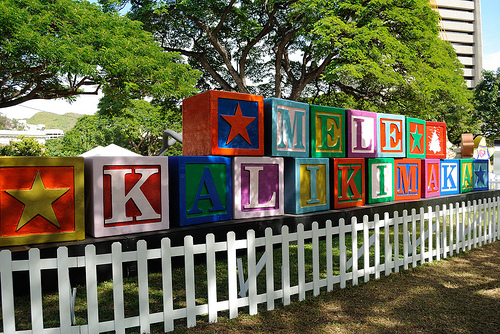
December 1! Time for us to learn some holiday vocabulary. Today’s word is a fairly popular on because of the well known phrase: Mele Kalikimaka (Merry Christmas). Mele, in this case, is a transliteration of the word merry. Don’t they sound super similar? Merry. MeleMele is also used for Merrie, as in Merrie Monarch – Mele Manaka.

It cracks me up that the name, Mary, is not Mele. It is Malia. But I am assuming that Malia is the word for the name Mary because of the Maria origin. Mary = Maria = Malia.

Mele is the Hawaiian word for song or to sing. Related to this, mele is also used in reference to a chant that is accompanied by hula (as opposed to oli which is just a chant with no hula or instrument accompaniment).

Mele is the same as melemele, the term most Hawaiian speakers use for yellow.

E mele ana ʻo ia i ke mele – He is going to sing the song.

Ua aʻo ʻoe i ke mele kahiko? – Did you learn the ancient song?

6615771201_2c88867b6a

Posted in Uncategorized | 1 Comment

Manawaleʻa

nvt. A generous heart, charity, alms, donation; to give freely and willingly; gratis, free, benevolent, beneficent. hoʻo.manawa.leʻa Caus/sim.

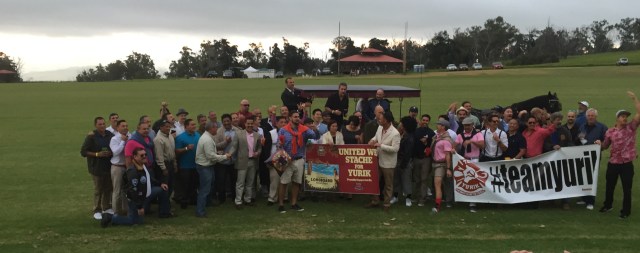
Yesterday, I had the good fortune of participating in a fundraiser for a Hawaiʻi Island firefighter who was injured in a swimming accident. I was reminded about the generosity and goodwill of people. Manawaleʻa. To give freely and willingly.

As we enter into the holiday season, it is a time of much goodwill and giving as people get into the true spirit of Christmas.

The word origin of the manawaleʻa is quite interesting. It is comprised of two words: manawa, in this case meaning affections, feelings, disposition, heart, seat of emotions. In fact the manawa is the fontanel at the top of the head of an infant, that area of the newborn’s head that you can see pulsing, that sacred part at the very top, or crown, of the head. Leʻa is the word for joy, pleasure, and happiness. So together, it speaks of joyful affections, pleasurable feelings. It is the way you feel after you give freely to others, whether it be monetarily or through service.

Hui manawaleʻa – Relief Society

Ua loaʻa mai ke kālā manawaleʻa – We received cash donations.

Ua manawaleʻa aku ʻo ia i nā hoahānau – He gave willingly to the cousins.

FullSizeRender

Posted in Uncategorized | Leave a comment

Māʻona

vs. Satisfied after eating, full, satisfying; to have eaten, to eat one’s fill.

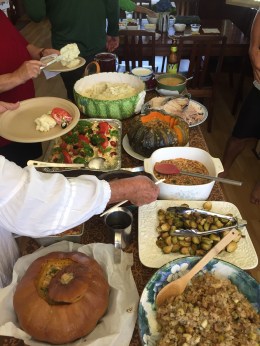
Are you “over it”? Did you walk around yesterday so full that you couldn’t even imagine eating anything else? Only to grab yourself a piece of pie? Yeah. That was me.

Māʻona, usually pronounced māʻana (but never spelled that way!) means full. It isn’t that OVER full need to lie down and rest can’t move full. It is that point when you are satisfied. Not overboard. You could add some modifiers such as:

Māʻona maikaʻi – to have eaten just the right amount because you are satisfied

Māʻona piha or māʻona loa – completely full

Mā’ona can also refer to intoxication – inu a mā’ona – drink until intoxicated.

Ua māʻona ʻoe? – Have you eaten? (In other words, are you satisfied with food)

Māʻona ka ʻuhane i ka ʻōlelo a ke Akua – the spirit is sustained by the word of God.

Ua māʻona ʻo Kāne i ka ʻawa – Kāne is intoxicated from kava (from the mele Ke Welina)

IMG_6561.jpg

Posted in Uncategorized | Leave a comment

Pāʻina

nvt. Meal, dinner, small party with dinner; to eat a pāʻina.

Yesterday, we learned the word for feast: ʻahaʻaina. Today’s word can be used for those who do a smaller scale celebration on Thanksgiving: pāʻina. Just a simple meal. You can use this word for your everyday kind of meal:

E pāʻina kākou – Let’s have a meal (let’s eat).

Pāʻina is also the word for party. So in this sense it could be used for more than the simple meal and gathering. A bunch of fun people gathering.

E pāʻina kākou – Letʻs party.

So if it is just you and your ʻohana or your significant other enjoying your turkey and mashed potato meal (or whatever your drother), you can refer to that as a pāʻina. Or if it is a group having a get together with some meaʻai (food), it is a pāʻina.

E maikaʻi ana ka pāʻina ma kona hale – The meal/party at his/her house is going to be good.

Ua ʻono ka meaʻai ma ka pāʻina – The food was delicious at the party.


Posted in Uncategorized | Leave a comment

ʻAhaʻaina

nvi. Feast, dinner party, banquet; to feast, Lit., meal gathering. Many types of ʻahaʻaina are listed below. hō.ʻaha.ʻaina To feast, give a feast.

Still on that Thanksgiving theme, homes throughout the U.S. will be having an ʻahaʻaina this week. A feast!

Now I am not one to celebrate Thanksgiving for its original purpose, you know, the whole indian and pilgrim thing. I have my own understanding of that relationship and trust me, it isn’t taught in the history books. Not one to deprive my ʻohana of another reason to have an ʻahaʻaina, I like to gather with ʻohana and special friends and just give thanks for all the blessings that life gives us. But mostly to eat good food. And lots of it.

That, coupled with the fact that I LOVE working in my kitchen, means that I am all for an ʻahaʻaina.

ʻAhaʻaina comes from two words: ʻaha – gathering or assembly, and ʻaina – meal (the word for land has a kahakō – ʻāina). A meal gathering. FEAST! My home always lovevs an ʻahaʻaina. It is no small feat. The food flows forever, we all eat way too much and we have leftovers for days.

The word, lūʻau, that we are much more accustomed to using, is more a “modern” term, first used in the 1850s.

Tomorrow we will learn a different word for those who do a small scale celebration of thanks.

E hele mai ana ka ʻohana i koʻu hale no ka ʻahaʻaina – The family is going to come to my house for the feast.

Robert_Louis_Stevenson_at_Royal_Luau,_1889

Robert Louis Stevenson at an ʻahaʻaina with aliʻi

Posted in Uncategorized | Leave a comment

Pelehū

FullSizeRender

Pelehū of Paʻauilo

1. Turkey (Meleagris gallopavo). Lit., swollen swelling. 

Since this is the week that many people in Hawaiʻi celebrate Thanksgiving,  I thought I would provide some useful words for you to actually USE when you are preparing and partaking in your feast. Pelehū – turkey. Literally, the word pelehū means swollen or swelling. Pelehū actually do look like they are a bit swollen, either in the wild or on the table.

There is also another word for turkey, more commonly used in Niʻihau and probably Kauaʻi (because of their close proximity to one another). It is pōkeokeo. Interesting enough, pōkeokeo also means plump. So in that way it is similar to swollen for pelehū. Pōkeokeo also refers to the gobble a turkey makes.

Now, I listen to pelehū a lot in the uplands in Paʻauilo. In fact, as I am typing this, I can hear them gobbling on the hill above our house and it is still dark outside. They run wild (faster in November, haha), lay their eggs in my pasture, come walking up the driveway and I don’t think it sounds like pōkeokeo or gobble gobble for that matter. But I guess if you use your imagination, it might work.  Another word for their gobble is kolokolo, which DOES sound a lot like the real turkey sound. I should know this, too, because in my household I hold the title of best turkey gobbler.

Emi ka pelehū i ka pule o ka lā hoʻomaikaʻi – Turkeys are cheap during the week of Thanksgiving day.

Wahine hulu pelehū – turkey feathered woman (said of women with mercenary interest in white men).

Aloha

Posted in Uncategorized | Leave a comment

Huapala

1. n. Orange trumpet or sweetheart vine (Pyrostegia venusta syn. Bignonia venusta, B. ignea), an ornamental climber from Brazil, bearing early in the year many deep-orange flowers, hence chestnut-colored or light brown. (Neal 764) Lit. ripe fruit. 2. nvs. Sweetheart, lover; pretty, handsome. 3. nvs. Chestnut brown.

Through teaching Hawaiian language for many years, I encounter many interesting Hawaiian names.  Back in the early days, I had a student whose Hawaiian name was Huapala.  I thought, how interesting that someone would name their child “ripe fruit.”  Literally, that’s what huapala means.  Ripe fruit (hua=fruit or seed; pala=ripe). Then I remembered that huapala also means sweetheart or pretty. And then it all made sense.

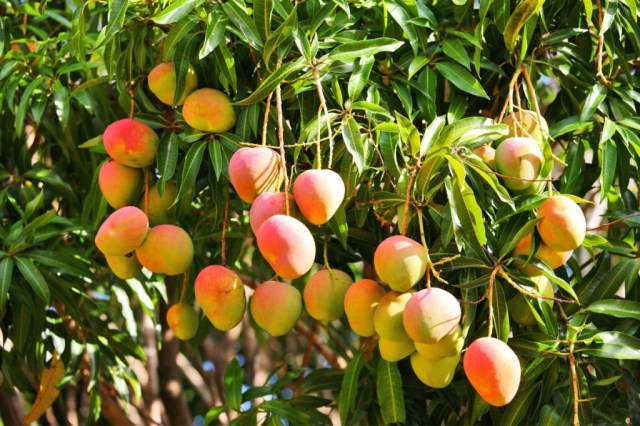
But I like the analogy of the ripe fruit.  Imagine, if you will, a fresh big mango, straight out of Waiʻanae (or Molokaʻi).  It is SO RIPE you can just bite into the skin and peel it down with your teeth.  Take one bite and the juices trickle down your chin, the flavors burst in your mouth. There’s nothing much more satisfying as far as fruit eating is concerned. The mess on your clothes and the strings in your teeth. So worth it.

Think of your sweetheart as a ripe fruit, a huapala, just waiting for you to…well, you decide!

kkk

Ua ʻike au i ka  huapala o koʻu maka i kēia kakahiaka – I saw the sweetheart of my eyes this morning.

ʻO wai kāu huapala? – Who is your sweetheart?

ʻO ʻoe ka huapala o koʻu poli – You are the delight of my bosom.

E Kohala i ka huapala kau i ka nuku – Oh Kohala with the handsome folk to delight the eyes (to appear at the mouth).

Copyright: 2015 – Liana Iaea Honda. All rights reserved. All versions of He Momi e Lei ai”, in its entirety, past and present, is the property of L. K. I. Honda. Reproduction and use of any kind other than the sharing of this website is prohibited. Alteration to the original content in any form is prohibited in every and any instance, and use in any other variant is prohibited without written consent of the author. Adress inquiries to: hemomi [at] gmail.com. Definitions and wise sayings are from: Hawaiian Dictionary by Pukui and Elbert, 1986. ʻŌlelo Noʻeau – Hawaiian Proverbs & Poetical Sayings by Mary Kawena Pukui, 1983.

Posted in Uncategorized | Leave a comment

Kūʻē

nvt. To oppose, resist, protest; opposite, versus, adverse, contrary, antagonistic, unwilling; objection. Lit., stand different. He manaʻo kūʻē, an opposite meaning. Kūʻē kānāwai, unlawful, contrary to law, illegal, against the law. Kūʻē aupuni, opposed or disloyal to the government, rebel. Hana kūʻē, violation, opposition. Mea kūʻē, adversary, opponent. Kūʻē i ka palapala kauoha, to contest a will. Kūʻē i kō haʻi manaʻo, to oppose others’ views; intolerant. Nā kāhuna kūʻē i ka Pope, ministers opposed to the Pope, Protestant ministers. Kūʻē kumukānāwai, unconstitutional. hoʻo.kū.ʻē To cause opposition, to stir up resistance; to oppose, clash.

Let’s take a look at the literal translation of this word, kūʻē. Stand different. Kū – to stand; ʻē – different. When you think about it from this perspective, if you stand different does it always have to mean something negative? Yes, you are in opposition of, say, someone else, but that doesn’t necessarily mean it is WRONG? Different does not equal wrong.

Let’s take a look at this quote from Princess Pauahi:

“Time will come when you feel you are being pushed into the background.
Never allow this to happen – stand always on your own foundation.
But you will have to make that foundation. There will come time when
to make this stand will be difficult, especially to you of Hawaiian birth;
But conquer you can – if you will.”  

I think some people have misconstrued the term kūʻē into something negative. If you have a different stance on something does it mean it is negative? Do you think this is what Pauahi intended in the quote above?

For my own keiki, I hope I instilled in them the good sense to be kūʻē — take that stand — whether it is turning away from the peer pressure of drugs or being able to stand up for someone being mistreated or bullied. Kū’ē, my children! And my haumana! Eh, even when your own teacher is doing something that you know is not pono, kūʻē!

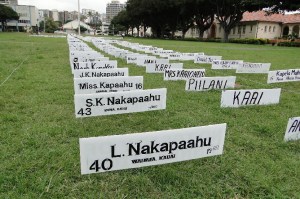
Our people are not new to this notion of standing in opposition, being kūʻē, to something they are passionate about. Have you heard of the kūʻē petitions? Over 38,000 signatures of our kanaka maoli (native Hawaiians) protesting annexation. Obviously their opposition didn’t change the course of history. Annexation occurred. But were they wrong? ʻAʻole paha. Probably not. Look us today! Still kūʻē. My life changed on Sunday when I saw my great grandfather’s name, Isaac D. Iaea, age 41, on page 479, line 28. MY GREAT GRANDFATHER! 100% Hawaiian. A minister at Kaluaʻaha Church, a kalawina church, located in Manaʻe, Molokaʻi!

IMG_6156

Photo by Lynette Cruz

Photo by Lynette Cruz

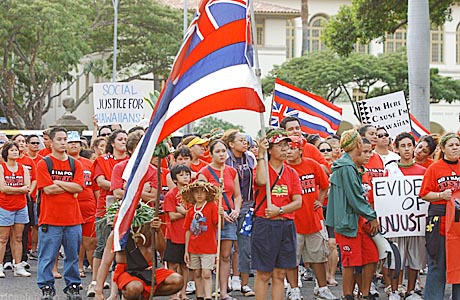
As far back as 2003, Hawaiians and more marched in red shirts, to protest court cases challenging the exclusionary policies of OHA, Hawaiian Homes, and Kamehameha Schools. Were they all wrong for being kūʻē?
lna_b

And now we (and by we I realize I am talking about SOME Hawaiians, not all) are displaying our kūʻē, our opposition, to TMT (Thirty Meter Telescope) atop Mauna Kea. And while it may be OFFENSIVE to some who hold differing spiritual or religious beliefs (and are unwilling to support a cause that honors the snow goddess, Poliʻahu), well, know that there is MUCH MORE to it than that. We are kūʻē because in addition to the sacredness of our mauna, the desecration of a place of worship for many, Mauna Kea is the source of water for us on Hawaiʻi Island. There are over a dozen telescopes up there already. They want to blow a GIANT hole into the mauna! I am certain God would not want anyone to go all up in the face of a Buddhist temple or the ʻāina or wai that is held sacred to any other religious group. The mere thought of it makes my blood boil. It is ridiculousness, if that is even a word. Check out this website for more info.

And now with the Naʻi Aupuni, once again, something being used to divide Hawaiians, as we seek to determine our destiny. Some kūʻē. Some kūʻē those who kūʻē. And some do nothing. Eh. Have an opinion. Make a difference. Here is a fine example. BE A PART OF THE SOLUTION OR BE PART OF THE PROBLEM.

As Pauahi said, “Time will come when you feel you are being pushed into the background.” We tired being pushed into the background. We going kūʻē, just like the thousands of signatures upon the kūʻē petitions. But we no need polls to see how many support or don’t support. Front lines. (executing my rights to speak pidgin now…as if we needed a news story to know that it is legit).

Kūʻē. Don’t let someone else determine your destiny. Or the destiny of your pulapula. Push to the foreground. And be an agent of change.

Posted in Uncategorized | Leave a comment

Pūʻali Koa

n. Armed forces, troops, regiment, brigade, corps.

Today, I get to stay home from work in celebration of Veteran’s Day. Yay me! I didn’t spend a lick of time in any Armed Forces yet I get to reap the benefits of the sacrifices made by soldiers of our nation.

Okay, in terms of sacrifice, I suppose my family sacrificed. My dad served two terms in Vietnam, leaving my mom to take care of three kids for a year at a time for each stint. My Uncle Alvin Iaea is still MIA from the Korean War, my brother enlisted in the Army and I still recall her sobbing in the dining room the evening he left for boot camp. Okay I guess in many ways even those not in the Armed Forces sacrificed in some form or another.

My dad was super active as a veteran of the US Army. He would call me as he participated in the parades being held in Waikīkī on this day. He would don his hat and white shirt and proudly announce his involvement as an enlisted soldier.

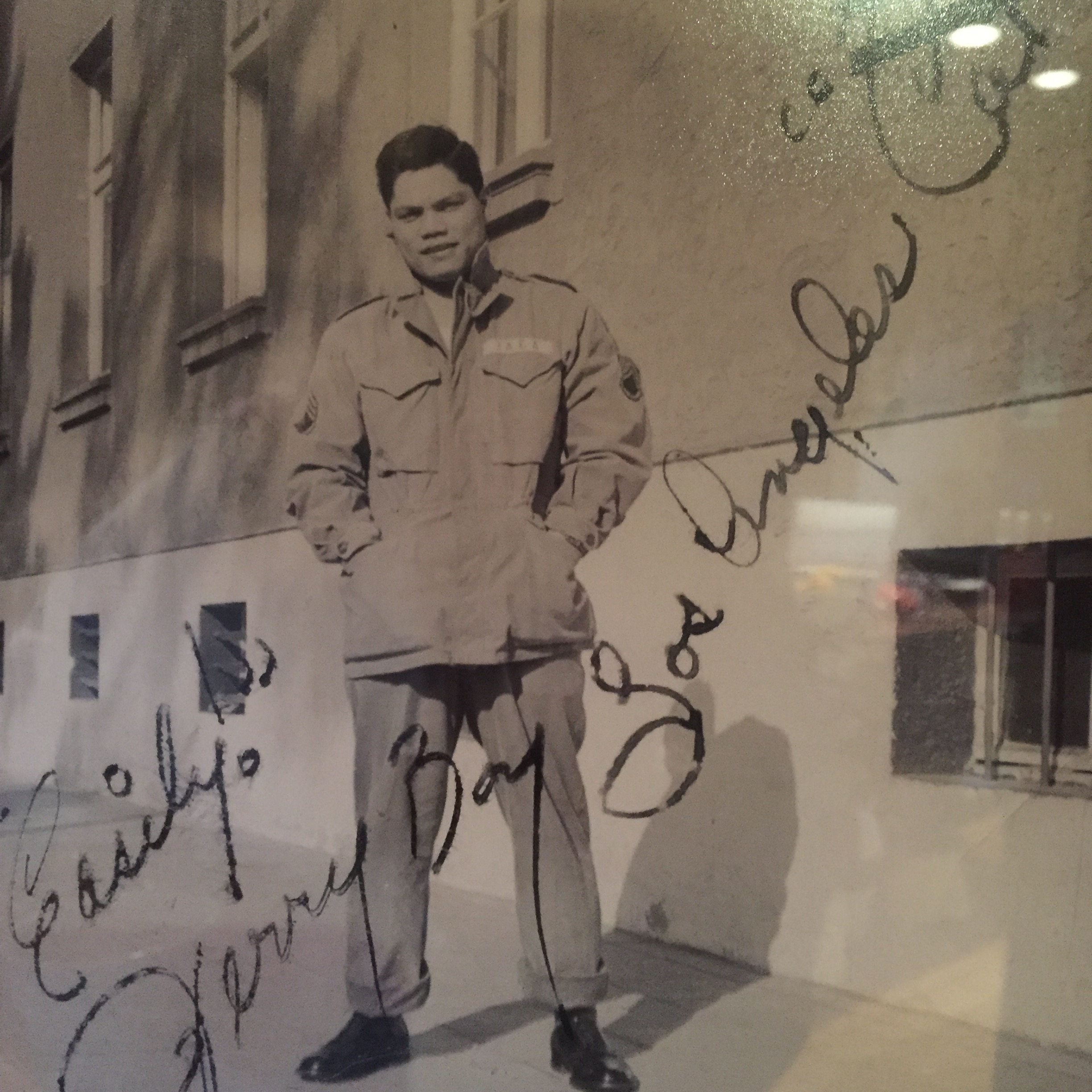
So today I honor all the pūʻali koa who serve our country, who so willingly sacrifice everything to deploy for reasons that go beyond my understanding. And for those who lost their lives while serving as a pūʻali koa. Mahalo nui. Special shout out to my ʻohana — and there are many — who served and continue to serve.

Shermaih K. Iaea, Jr., US Army

Shermaih K. Iaea, Jr., US Army

Posted in Uncategorized | Leave a comment