Ālaina

n. Obstacle, obstruction.

Change is in the air.

We collectively strive to protect our mauna — Mauna Kea, Haleakalā, and all the ʻāina that our indigenous people worldwide want to protect.  Something is in the air. There is a movement to save our Mauna a Wākea from further desecration. That movement deserves a much longer post. Click here to access more information.

Collective efforts to prevent the building of TMT (Thirty Meter Telescope) on the top of our sacred mountain is just one ālaina that we must overcome.  We are at one alo pali (face of a cliff), we must climb it successfully, only to be met by another. Must be similar to what Naeʻole encountered when escaping the Kohala warriors with an infant Kamehameha Paiʻea to protect. One ālaina after another.

It reminds me of the epic journey of Hiʻiaka to fetch Pele’s dream lover, Lohiʻau.  During her travels from Halemaʻumaʻu to Kauaʻi, she encountered many ālaina, some big, some small.  In all her efforts, she inevitably would call upon the aid of her kūpuna, ‘ohana, and higher powers to kōkua, to give her the strength that she would need to overcome.  And sure enough, they would come through for her.

I think that is what will help us to overcome our ālaina, as individuals, as a people.  We always seek the guidance, strength, and wisdom of our ʻaumākua and our kūpuna. We look to our ‘ohana for their unconditional support.  We seek the assistance of higher powers.  The ālaina are out there to enhance our abilities to face challenges and become stronger for our future generations.

Copyright: 2015 – Liana Iaea Honda. All rights reserved. All versions of He Momi e Lei ai”, in its entirety, past and present, is the property of L. K. I. Honda. Reproduction and use of any kind other than the sharing of this website is prohibited. Alteration to the original content in any form is prohibited in every and any instance, and use in any other variant is prohibited without written consent of the author. Adress inquiries to: hemomi [at] gmail.com. Definitions and wise sayings are from: Hawaiian Dictionary by Pukui and Elbert, 1986. ʻŌlelo Noʻeau – Hawaiian Proverbs & Poetical Sayings by Mary Kawena Pukui, 1983.
Posted in Uncategorized | Leave a comment

Hoʻomanawanui

Patience, steadfastness, fortitude; to have patience, fortitude; patient, steadfast, courageous and persevering; to try one’s patience.

Now this is a word that I am sure you heard when you were growing up in Hawaiʻi. Hoʻomanawanui. Be patient. Literally, hoʻo- is a causative (causes the action to happen). Manawa = time. Nui = big/lots. To cause great time. Patience. And isn’t it interesting that patience is synonymous here with steadfastness and fortitude. For one to have patience you must have fortitude and be steadfast. Patience is not easy. Sometimes we want things to happen right away. Get it over with. But we need to hoʻomanawanui. Take the time to pause. Do not be afraid to give what needs time, time. Hoʻomanawanui to give the universe time to put things in order. In the words of a dear haumana of mine who is now my kumu, stop micromanaging the flow.

At times our patience is tested beyond what we may consider reasonable. These are the times when we must hoʻomanawanui even more! Create rest time, be patient. Though we can make choices to influence the outcome of certain events, we don’t always have control over the outcome. E hoʻomanawanui. Be patient.

When kupuna native speakers say this word it comes out sounding like homananui. I love it.

He kanaka hoʻomanawanui i ka lā a me ka ua – A man who patiently endures the sun and the rain.

He nohona hoʻomanawanui – A way of life that tries one’s patience.

E moni i ke koko o ka inaina, ʻumi ka hanu o ka hoʻomanawanui – Swallow the blood of wrath and hold the breath of patience.


Copyright:  2015 – Liana Iaea Honda. All rights reserved. All versions of He Momi e Lei ai”, in its entirety, past and present, is the property of L. K. I. Honda. Reproduction and use of any kind other than the sharing of this website is prohibited. Alteration to the original content in any form is prohibited in every and any instance, and use in any other variant is prohibited without written consent of the author. Adress inquiries to: hemomi [at] gmail.com. Definitions and wise sayings are from: Hawaiian Dictionary by Pukui and Elbert, 1986. ʻŌlelo Noʻeau – Hawaiian Proverbs & Poetical Sayings by Mary Kawena Pukui, 1983.

Posted in Uncategorized | Leave a comment

Kaumaha

1. nvs. Heavy; weight, heaviness. Fig., sad, wretched, dismal, dreary, downcast, troubled, depressed; grief. Meakaumaha loa, tragic event, tragedy. hoʻo.kau.maha To burden, load down, laden. Fig., to oppress, cause sadness or grief; sorrowful, woeful, sorry, depressed, oppressive, burdensome. Mea hoʻokaumaha moku, ballast. Mai hoʻokaumaha, don’t worry. (PPN mamafa, PCP taumafa.)

2. nvt. Sacrifice, offering; to make a sacrifice or offering. See ex., nikiniki 2. Kaumaha aʻe ana iā Laka, to offer to Laka. (PPN taumafa.)

Sadness, I suppose, no matter what language, is synonymous with heaviness. A burden that one carries on the shoulders, in the body. Breaks you down to the point of illness sometimes. Kaumaha. That is sadness. Heavy. Weight. Oh my, just reading the words above increases the kaumaha. Wretched. Dismal. Dreary. Downcast. Troubled. Depressed. Grief.  We all can quickly recall these moments in our lives. As if they were yesterday. Or for some, it is today.

Nui ke kaumaha – The sadness is great.

Ua kaumaha ka wahine i kēlā pule aku nei – The woman was sad last week.

In Hawaiian, mist and rain are images of kaumaha. And while I do love me some mist and rain, there is a certain sadness that often accompanies the wetness that envelopes me.

Luʻuluʻu Hanalei i ka ua nui; kaumaha i ka noe o Alakaʻi – Heavily weighted is Hanalei in the pouring rain; laden down by the mist of Alakaʻi.

Below are two ʻōlelo noʻeau using kaumaha as a burden:

Oi hoʻi he hana hāʻawe o kaumaha – It isnʻt work to carry this heavy burden on the back (It is no trouble at all).

Pau ka pali, hala ka luʻuluʻu kaumaha – The cliff is now passed and with it the burden of difficulty.

For those of you experiencing a mea kaumaha loa (tragic event), I wish upon you light and love. Surround yourself with family and friends. And let the rains come. There will be a rainbow.

Copyright: 2015 – Liana Iaea Honda. All rights reserved. All versions of He Momi e Lei ai”, in its entirety, past and present, is the property of L. K. I. Honda. Reproduction and use of any kind other than the sharing of this website is prohibited. Alteration to the original content in any form is prohibited in every and any instance, and use in any other variant is prohibited without written consent of the author. Adress inquiries to: hemomi [at] gmail.com. Definitions and wise sayings are from: Hawaiian Dictionary by Pukui and Elbert, 1986. ʻŌlelo Noʻeau – Hawaiian Proverbs & Poetical Sayings by Mary Kawena Pukui, 1983

Posted in Uncategorized | Leave a comment

Lipo

1. nvs. Deep blue-black, as a cavern, the sea, or dense forest; dim, distant; grief (see ex., haʻalipo). See kumulipo.Lipo lolohuamea, the dark depths [the unfathomable mystery of the gods]. (Probably PPN lipo.) 2. (Cap.) n. Name of a star in the southern skies, and hence sometimes the name for the southern sky.

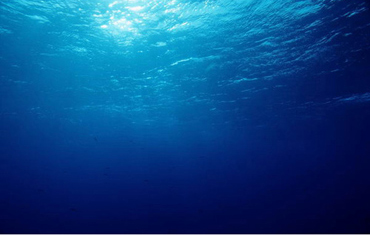
609_DeepBlue3New Hawaiian language learners know the color of blue to be polū (or uliuli) and the color black to be ʻeleʻele. Because Hawaiians love the richness of dark colors, such as the green shades of the uplant forests or the rich dark blue colors in the ocean we have other words to describe these colors. Lipo is one of these words. Because these colors are so dark, lipo is also synonymous with grief. It is interesting how our imagery of grief is that of darkness. The word kumulipo means origin, or genesis, the source of life. If we look at its parts it would be kumu, which refers to the source, and lipo – darkness. Source of darkness. This is the Hawaiian creation chant.

ʻAʻohe manu noho i ka lipo e pakele i ke kāpiʻo – No bird of the deep forest can escape his snare (said of a person who can win the love of anyone he chooses).

Ke kai lipolipo polihua a Kāne – The dark blue ocean of Kāne (the deep sea out of sight of land).

Copyright: 2015 – Liana Iaea Honda. All rights reserved. All versions of He Momi e Lei ai”, in its entirety, past and present, is the property of L. K. I. Honda. Reproduction and use of any kind other than the sharing of this website is prohibited. Alteration to the original content in any form is prohibited in every and any instance, and use in any other variant is prohibited without written consent of the author. Adress inquiries to: hemomi [at] gmail.com. Definitions and wise sayings are from: Hawaiian Dictionary by Pukui and Elbert, 1986. ʻŌlelo Noʻeau – Hawaiian Proverbs & Poetical Sayings by Mary Kawena Pukui, 1983

Posted in Uncategorized | Leave a comment

Lili

nvs. Jealous; highly sensitive to criticism; jealousy, envy; anger and mental anguish felt if one’s loved ones are criticized. Lili punalua, see punalua. hoʻo.lili To provoke jealousy; jealous. (PPN lili.)

No one particular reason for choosing this word, other than it is part of one of my favorite ʻōlelo noʻeau (wise saying):

Na ka pupuka ka lili – Jealousy belongs to the ugly.

And isn’t it true? Jealousy is such an ugly trait that we should all strive to examine our true feelings and thoughts when we feel jealous, whether it is insecurity with a loved one or a colleague or friend. Hawaiians were (and still are) such accepting people. Anyone who has studied our history from the arrival of Captain Cook through today can agree. All races. All beliefs. That’s one of the main reasons people flock here. THey come to visit and then stay. And then, go figure, many try to change the way things are. But I digress.

Aloha kekahi i kekahi. Love one another. No need to be lili.

Hawaiians had so much love for one another they even practiced polygamy (many spouses). A husband or a wife may have more than one spouse, sometimes even sisters sharing the same husband. Sometimes it was a relationship based out of convenience and necessity and sometimes it was based on romantic love. There is even a term for the relationship between two people who share the same spouse.  It is punalua. And if there was jealousy from one punalua to another, it was known as lili punalua – bitter jealousy of a rival and this was frowned upon. Many stories tell of a spouse who was lili of their punalua, causing misfortune, and, utlimately, the true misfortune fell upon the jealous one.

Ua lili ʻo ia i kāna keiki – He was jealous of her child.

Mai lili i ka hana a haʻi – Dont be jealous of the tasks of someone else.

Copyright: 2015 – Liana Iaea Honda. All rights reserved. All versions of He Momi e Lei ai”, in its entirety, past and present, is the property of L. K. I. Honda. Reproduction and use of any kind other than the sharing of this website is prohibited. Alteration to the original content in any form is prohibited in every and any instance, and use in any other variant is prohibited without written consent of the author. Adress inquiries to: hemomi [at] gmail.com. Definitions and wise sayings are from: Hawaiian Dictionary by Pukui and Elbert, 1986. ʻŌlelo Noʻeau – Hawaiian Proverbs & Poetical Sayings by Mary Kawena Pukui, 1983

Posted in Uncategorized | Leave a comment

Loku

nvi. Downpour of rain; blowing of wind; to pour, of rain; to blow, as a gale; torrential. Fig., to feel deep emotion, pain, sorrow; to weep profusely; intense. Also noku. Ka ua loku, the pouring rain. hoʻo.loku To pour, as rain; to disturb; agitated.

Today’s word is filled with grief – loku. While literally it can refer to a downpour of rain (and living on the Hāmākua Coast, I know a good downpour), it also refers to deep pain and sorrow. Can’t you just feel it? When you cry so hard it is as if your body is experiencing a torrential rain of the soul. So heavy and intense. And fatigue sets over you and yet you cannot sleep? That is loku.

One reason we give Hawaiian names is to commemorate an event in history or in life, right? I had a chocolate labrador that I named Loku because I got her as a puppy during a very sad time in my life. And while her name always reminded me of this time, she brought me great joy and changed my outlook on the painful event that took place at that time.

Ke aloha loku i ka puʻuwai – love surging in the heart.

Ke loku nei ka makani – the wind is blowing in a gale.

I hea ʻoe i ka wā a ka ua e loku ana? – Where were you when the rain was pouring? (A reply to one who asks his neighbor for some of his crop. If he answered that he had been away during the rains, he would be given some food; but if he said that he had been there, he would be refused. It was due to his own laziness that he did not have a crop as fine as his industrious neighbor’s.)

Ka ua loku o Hanalei – The pouring rain of Hanalei.

Hilo ʻāīna ua lokuloku – Hilo of the pouring rain.

Ke aloha nui iā ʻoe, e kuʻu hoa, i kēia wā luʻuluʻu – Love to you, my friend during this time of grief.

Copyright: 2015 – Liana Iaea Honda. All rights reserved. All versions of He Momi e Lei ai”, in its entirety, past and present, is the property of L. K. I. Honda. Reproduction and use of any kind other than the sharing of this website is prohibited. Alteration to the original content in any form is prohibited in every and any instance, and use in any other variant is prohibited without written consent of the author. Adress inquiries to: hemomi [at] gmail.com. Definitions and wise sayings are from: Hawaiian Dictionary by Pukui and Elbert, 1986. ʻŌlelo Noʻeau – Hawaiian Proverbs & Poetical Sayings by Mary Kawena Pukui, 1983

Posted in Uncategorized | Leave a comment

Honohono

1. n. Short for honohono kukui. (PPN hongohongo.)

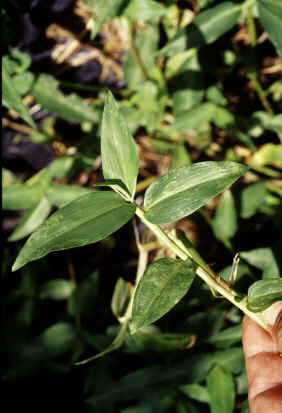
2. n. The wandering Jew or dayflower (Commelina diffusa), known in many temperate and tropical countries, a creeping weed, rooting at the joints, and bearing grasslike, ovate leaves and small bright-blue flowers. (Neal 185.) Also honohono wai, and mākolokolo. Cf. honohono ʻula.

3. n. A very rare native mint (Haplostachys haplostachya), a downy erect herb with oblong or narrower leaves and white flowers. (Neal 732.)

4. See ʻokika honohono.

5. Same as hohono, bad-smelling.

6. n. A children’s game; the child locked fingers of two hands and thrust them into the sand, letting the sand out through a small opening.

Hono hono (honohono1.jpg)

Honohono

Honohono grass (which is not really a grass) is what we call this plant growing wild in our pasture (and more recently in my garden) and commonly found throughout the islands. It has some great medicinal qualities. It can bring down fevers, help heal injured eyes, and is good to drink as a tea. I remember Papa Auwae’s daughter talking about it during my tenure at Hilo High School. Papa Auwae was a kahuna lāʻau lapaʻau from Hawaiʻi Island and quite well known. Fortunately he taught many, including his daughters, the art of healing using medicinal plants.

There is a beautiful orchid called the honohono orchid, given the same name as the grass, probably because the leaves of this orchid plant grow alternately on either side of the stem, like the grass. Ironically, the leaves drop off once the orchids bloom. Honohono orchids have a great scent:

honohono orchid

honohono orchid

The fifth definition above, refers to a bad smell (unlike the orchid!), a putrid kind of smell, that acrid shishi (urine) smell. For this reason you might not want to be using the honohono orchid or honohono grass in a lei. Its medicinal qualities may be valuable but symbolically it might not be a good idea for a lei.

Loaʻa ka honohono ma koʻu māla – There is honohono grass in my garden.

Honohono ma kēlā ʻaoʻao o ka lumi – It is shishi smelling on that side of the room.

Copyright: 2015 – Liana Iaea Honda. All rights reserved. All versions of He Momi e Lei ai”, in its entirety, past and present, is the property of L. K. I. Honda. Reproduction and use of any kind other than the sharing of this website is prohibited. Alteration to the original content in any form is prohibited in every and any instance, and use in any other variant is prohibited without written consent of the author. Adress inquiries to: hemomi [at] gmail.com. Definitions and wise sayings are from: Hawaiian Dictionary by Pukui and Elbert, 1986. ʻŌlelo Noʻeau – Hawaiian Proverbs & Poetical Sayings by Mary Kawena Pukui, 1983.
Posted in Uncategorized | Leave a comment

Kālua

vt. To bake in the ground oven; to burn brick or lime; baked. (kā-, causative + lua, pit).

We are all familiar with kā¬ua pig, or puaʻa kālua. What an ingenious way of cooking. It is the Polynesian way, as kālua is not just done here in Hawaiʻi. I have seen it done much the same way in other Polynesian islands. Samoans have what is called an “umu” which is similar to an imi although it is done in a shallow pit and then piled high, above ground level, whereas the imi, when filled and covered is ground level.

The kā in kālua is actually a causative, similar to hoʻo- (for those who have taken a Hawaiian language class). The -lua, is for pit, because in order to kā¬ua you need to bake in an imi which is a pit oven of sorts. Thus the name, kālua.

And you know anything can be cooked kālua style, including pig, dog (yes, dog, but maybe that is a word for another day), chicken, as well as kalo (taro, ʻuala (sweet potato, ʻulu (breadfruit). In traditional times, there was an imi for women’s food and an imi for men’s food. There were strict eating restrictions and certain foods that the women co uld not eat, such as puaʻa, bananas and certain fish. On a positive note, for the women, it was the men who prepared all the food, AND they had to prepare them separately. I would surely give up pork and bananas for the luxury of not having to prepare meals!

Ua kālua ʻia ka iʻa – the fish was cooked in an imu.

ʻOno loa ka puaʻa kālua – Kālua pig is very delicious.

Copyright:  2015 – Liana Iaea Honda. All rights reserved. All versions of He Momi e Lei ai”, in its entirety, past and present, is the property of L. K. I. Honda. Reproduction and use of any kind other than the sharing of this website is prohibited. Alteration to the original content in any form is prohibited in every and any instance, and use in any other variant is prohibited without written consent of the author. Adress inquiries to: hemomi [at] gmail.com. Definitions and wise sayings are from: Hawaiian Dictionary by Pukui and Elbert, 1986. ʻŌlelo Noʻeau – Hawaiian Proverbs & Poetical Sayings by Mary Kawena Pukui, 1983.

Posted in Uncategorized | Leave a comment

Palahē

vs. Fragile, easily torn, as rotting cloth; pulverized, smashed. 

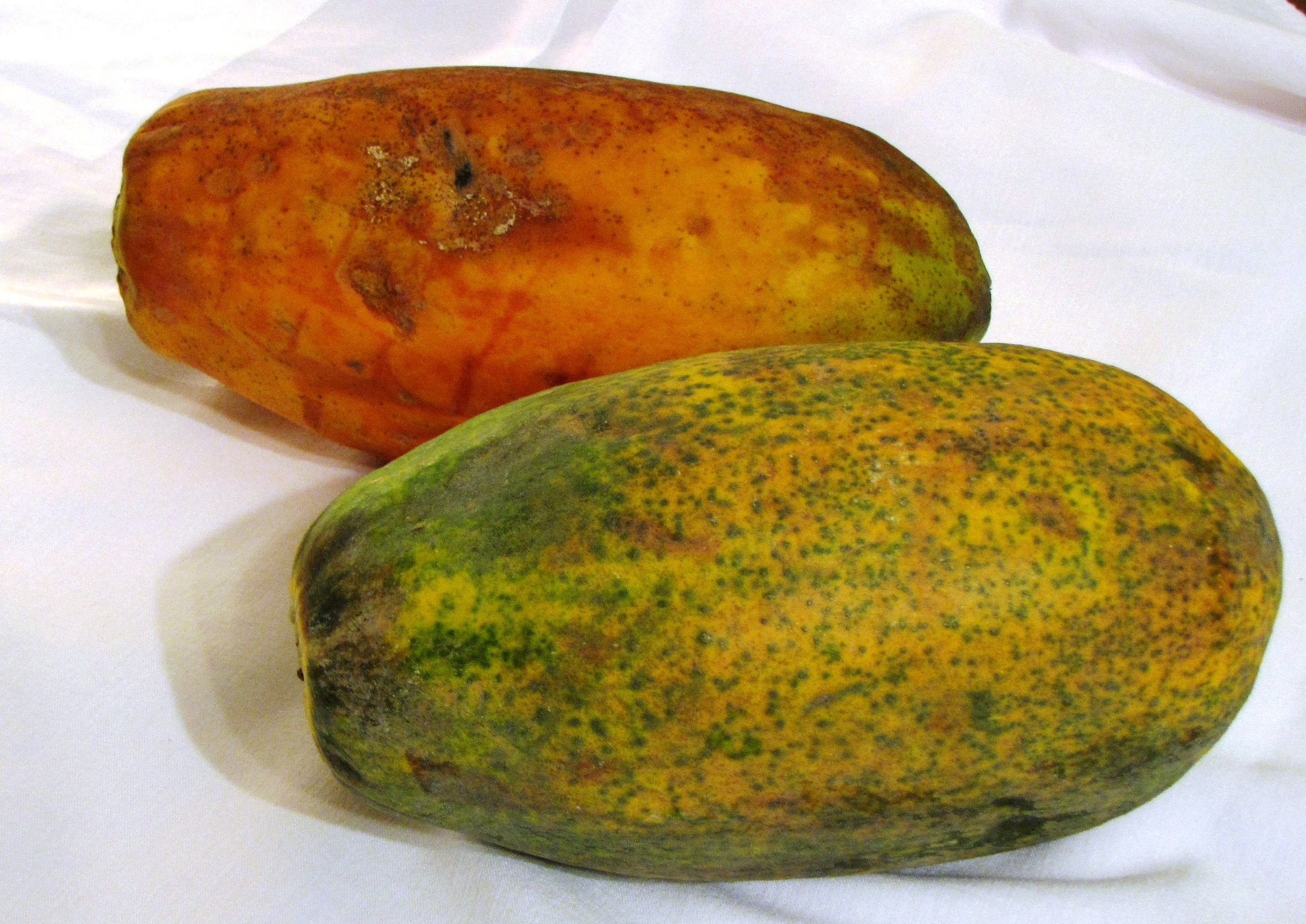
Here is a small kid time word that is commonly used to refer to an over-ripe fruit. Palahē. You know when you forget that papaya sitting out on the counter, waiting to get ripe and then it passes that “ripe” stage and heads on over to the palahē stage? Palahē. Da buggah stay all palahē. Leaking all over the counter. In my small kid days it was used in reference to those mangoes fallen on the ground as we scampered around to find one that was edible. Just grab a good part of the skin with your mouth and pull down.

I heard a native speaker use palahē in reference to firewood that is used in the imu. When the wood is burned down ready to be filled with puaʻa, ʻuala, and kalo, the wood is palahē.

Pala is the word for ripe. Hē refers to grave or to scrape. Think of palahē as fruit that is ripe for the grave or fruit that is scrapable.

Moʻa palahē – overcooked to the point of falling apart, as meat.

Poluku ʻia a palahē ke kino – a body pounded and mashed.

Palahē ka hēʻī – The papaya is overripe.

papayas

Copyright: 2015 – Liana Iaea Honda. All rights reserved. All versions of He Momi e Lei ai”, in its entirety, past and present, is the property of L. K. I. Honda. Reproduction and use of any kind other than the sharing of this website is prohibited. Alteration to the original content in any form is prohibited in every and any instance, and use in any other variant is prohibited without written consent of the author. Adress inquiries to: hemomi [at] gmail.com. Definitions and wise sayings are from: Hawaiian Dictionary by Pukui and Elbert, 1986. ʻŌlelo Noʻeau – Hawaiian Proverbs & Poetical Sayings by Mary Kawena Pukui, 1983.

Posted in Uncategorized | Leave a comment

Kihe

1. vi. Sneeze. Cf. mauli olakiha. (PPN tise.)

Actually there are other translations for this word, mostly to do with plant names. But we will learn it this week for “sneeze.”

In English we usually say “God bless you” or Gesundheit in German. In Hawaiian we say “Kihe a mauli ola”. In other words, sneeze, and may you have long life.” Mauli ola literally means breath of life, power of healing. More often, though, people will just say ola, when someone sneezes.

So next time the person next to you sneezes, say Kihe a mauli ola or just ola. and everything should turn out alright.

Copyright:  2015 – Liana Iaea Honda. All rights reserved. All versions of He Momi e Lei ai”, in its entirety, past and present, is the property of L. K. I. Honda. Reproduction and use of any kind other than the sharing of this website is prohibited. Alteration to the original content in any form is prohibited in every and any instance, and use in any other variant is prohibited without written consent of the author. Adress inquiries to: hemomi [at] gmail.com. Definitions and wise sayings are from: Hawaiian Dictionary by Pukui and Elbert, 1986. ʻŌlelo Noʻeau – Hawaiian Proverbs & Poetical Sayings by Mary Kawena Pukui, 1983.

Posted in Uncategorized | Leave a comment