Moa

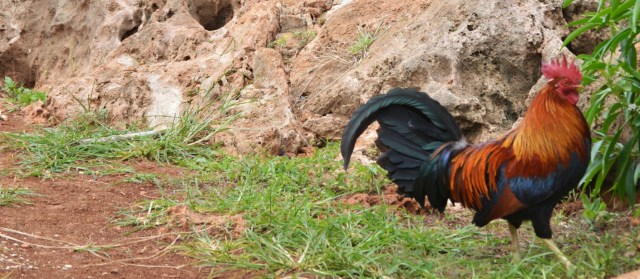
1. Chicken, red jungle chicken (Gallus gallus), fowl, as brought to Hawaiʻi by Polynesians; for some people, an ʻaumakua.

Okay, the moa is not a native bird but it did play a big role in Hawaiʻi. Yes, we are talking about a chicken.

The moa was the only fowl brought to the islands by the first settlers during the migrations here. It was brought primarily for food though the Hawaiians were resourceful enough to use all parts of the moa, including the feathers for decorations (like for kāhili-feather staffs) and bones for fishhooks. The moa was also used as a substitute sacrifice during heiau ceremonies. It is also considered an ʻaumakua, or family guardian, to some. It is thought to be a form of the moʻo class of ʻaumakua.Often a moa of a particular color (whether pure white, pure black, smoky or speckled) was called for as an offering in a healing ritual.

There is one area where tradition continues here in Hawaiʻi. The sport of cockfighting (hoʻohaka moa) was popular way back when in Hawaiʻi (and Tahiti), where the aliʻi (royalty) would lay wages on their birds. Ah, the legacy continues. I am not sure, but I bet they didn’t dress their moa with knives! I am sure Hawaiians would call that extreme hoʻohaka moa. No need da knives! So over the top.

ʻOno ka moa – Chicken is delicious.

He aliʻi ka moa – The rooster is a chief (the rooster sleeps on a high perch. His feathers are used in kāhili, which are the symbols of chiefs).

He moa kani ao ia, a pō kau i ka haka – He is a cock that crows in the daytime, but when night comes, he sits on a perch (said of a person who brags of what he can do, but when difficulties come he is the first to remove himself from the scene).
1-chickenstell

Posted in Uncategorized | Leave a comment

ʻElepaio

1. nvi. A species of flycatcher with subspecies on Hawaiʻi (Chasiempis sandwichensis sandwichensis), Kauaʻi (C. sandwichensis sclateri), and Oʻahu (C. sandwichensis gayi). The Kauaʻi subspecies is also called ʻāpekepeke. 

2. n. A native variety of taro; the leaves are mottled with white. (HP 17).

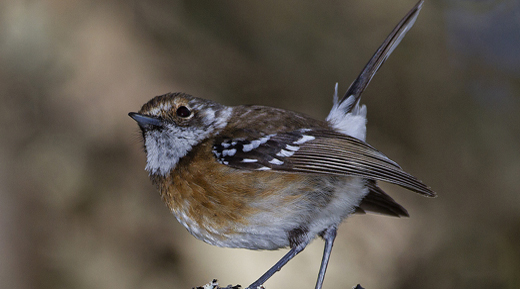
elepaio 520x289 Clark

The ʻelepaio has three distinct subspecies: found on Kauaʻi, Oʻahu, and Hawaiʻi. And reasoning would go that they are common on Kauaʻi and Hawaiʻi, not so on Oʻahu (can you guess why?). It is a small bird (about 5 inches) primarily brown with a light underside and a cocked-tail posture. It catches insects on the fly or on vegetation. It is native to Hawaiʻi.

It is a bold and curious bird that is known to follow hikers throughout the forest. It is considered the guardian of canoe makers (nā kālai waʻa) as it aids them in choosing the right tree. Canoe makers knew that if an ʻelepaio is on a koa tree, spending a lot of time, that tree is probably infested with insect and is probably not the best choice for a waʻa (canoe).

The ʻelepaio has adapted quite well, unlike most native forest bird. Although it is of small size, it was eaten, but its feathers were not collected, unlike a number of other first birds.

Nui nā ʻelepaio ma ka nahele – There are a lot of ʻelepaio in the forest.

Ua ʻelepaio ʻia ka waʻa – The canoe is [marked] by the ʻelepaio (applied to a failure).

ʻElepaio kāhea iʻa – Fish calling ʻelepaio (said of one who talks about his wants and does nothing to obtain them).

Ua ʻelepaio ʻia ka hana – The work has been spoiled by an ʻelepaio (said of any task that has to stop before completion).

Posted in Uncategorized | Leave a comment

Mamo

1. Black Hawaiian honey creeper (Drepanis pacifica): its yellow feathers above and below the tail were used in choicest featherwork. Formerly found only on Hawaiʻi, not seen since the 1880s. A Molokaʻi species was Drepanis funerea, not seen since the 1890s; also hoa and ʻōʻō nuku mū.

2. Safflower or false saffron (Carthamus tinctorius), a branching annual, 30 to 120 cm high, from Asia, grown for its flowers, which are yellow, like the feathers of the mamo bird. (Neal 858.)

3. A sergeant fish (Abudefduf abdominalis), to about 163 mm long. Also mamamo, mamo pohole. (PPN mamo.)

4. Descendant, posterity.

This week will focus on manu, birds, because they are my favorite creatures and I think they deserve some recognition.

In Hawaiʻi, birds were used for food, decoration, omens, religious purposes. The mamo was no exception.

Mamo was a small black honeycreeper with a few (very few) choice yellow feathers above and below its tail. Its beak was long and curved, just perfect for drinking nectar from lehua blossoms, a trait found in a few of the honeycreepers. Their feathers were gathered by the bird catchers who would smear a sticky substance on the branches of the ʻōhiʻa lehua and wait until a bird would get stuck. Then they would gently hold the bird, remove the few yellow feathers, wash its feet with kukui oil to remove the stickiness and let the bird go. These feathers were then given to those who specialized in making symbols of royalty such as feather lei, helmet, capes and cloaks.

Without going into the detail of the adaptive radiation, evolution, and all of that, it will suffice to say that the mamo, a forest bird unique to Hawaiʻi, no longer exists due to a number of reasons, including loss of habitat, introduced diseases, and introduced predators. In fact, I have a photograph from the Bishop Museum that is purported to be of the LAST known living mamo, perched on the finger of a man. It is said that they killed the mamo after the picture was taken, knowing that it had no mate, so they could study it. I hate that picture but I keep it as a reminder of our fragile environment and our insensitivity to it.

The mamo feathers are the most highly prized of all the bird feathers that were used in feathered symbols. Its feathers were held in the highest esteem and was sought after by the highest, most sacred ranking aliʻi. Therefore, the word mamo is also synonymous with someone held in high regard or esteem. For this reason, you may know someone named Mamo. Though the name refers to the honeycreeper, it is more than likely the name was given because the parents regard the child in high regard as precious as our aliʻi.

117152-004-205D0D56

Posted in Uncategorized | Leave a comment

Hele akula a ahu, hoʻi mai nō e omo i ka waiū o ka makua

He goes away and, gaining nothing by it, returns to nurse at his mother’s breast.

This is said of a grown son or daughter who, after going away, returns home for support.

In the words of text messages, LOL.

I am sure you know of a situation where this applies. Hopefully it isn’t you. Or if it is, you are making the most of it by at least baking the cookies to go along with it.


Posted in Uncategorized | Leave a comment

Waiūpaka

Butter

Today is the last of the waiū words for the week (we will do an ʻōlelo noʻeau tomorrow). Today’s word is waiūpaka – butter. In fact, the paka part in there comes from the English word, butter. You might even see waiūbata. Which reminds me of a story from my hanabata days (not to be confused with hanapaka).

I remember helping my mom make some sort of dessert using the electric mixer to make whipped cream out of heavy cream. She kept telling me, “Be careful, you have to do it just right or…” you guessed it. It turned into waiūpaka. She was not too happy. I guess her recipe didn’t call for waiūpaka. But I, on the other hand, was totally thrilled that waiūpaka came out of that waiū kalima. It was fascinating. Like a science experiment in the kitchen!

Hope you all are making use of your waiū words. Here they are, plus a couple more:

waiū – milk

waiūpaʻa – cheese

waiūtepe – yogurt

waiū hakuhaku – cottage cheese

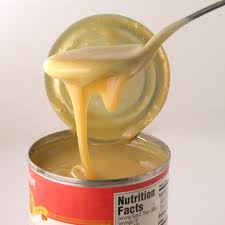
waiū kia – condensed milk

waiū kini – canned milk (like evaporated milk)

waiū pauka – powdered milk

Posted in Uncategorized | Leave a comment

Waiū Kia

Condensed milk.

You are going to love this explanation. You already know that waiū is the Hawaiian word for milk. Kia is the word for deer. Why would condensed milk be called “deer milk”? I don’t think even the old timers would get this one!

It is called waiū kia because the first cans of condensed milk had a picture of a deer on the label. So I guess the name seemed to stick. “Go grab the can with the deer on it. The waiū kia!” Waiū kia reminds me of morning breakfasts, smearing some of that thick gooey goodness on creme crackers, with a side of cocoa. YUM! Keu a ka ʻono!

Want a delicious dessert? Boil a couple of sweet potatoes (purple Okinawa sweet potatoes are the prettiest for this), them peel, mash, add some coconut milk and then some waiū kia to sweeten it up a little more. Talk about delicious! That is kōʻelepālau.

ʻOno ka waiū kia ma luna o ke pelena – Condensed milk is delicious on crackers.

He waiū kia kēlā – That (far) is condensed milk.

Unknown

Posted in Uncategorized | Leave a comment

Waiūpaʻa

Cheese

Hawaiians didn’t drink milk (well, babies did, from their mothers) nor did they have cheese (no cows or goats to be found prior to late 1700s) so when cheese was introduced to Hawaiʻi they had to make up a new word for this dairy product. Waiūpaʻa is the logical choice! Waiū is milk (remember from yesterday? Liquid from the ū?) and paʻa means firm or solid. In other words, waiūpaʻa literally means solid milk. How clever!

Check out the list below for a list of the different varieties of waiūpaʻa:

Waiūpaʻa Kuikilani Swiss cheese

Waiūpaʻa keka – Cheddar cheese

Waiūpaʻa parmesan – Parmesan cheese

Waiūpaʻa i haʻaliu ʻia – Process(ed) cheese

ʻOno ka waiūpaʻa – CHeese is delicious.

E kūʻai i ka waiūpaʻa pamesana naʻu, ke ʻoluʻolu – Buy parmesan cheese for me, please.


Posted in Uncategorized | 2 Comments

Waiū

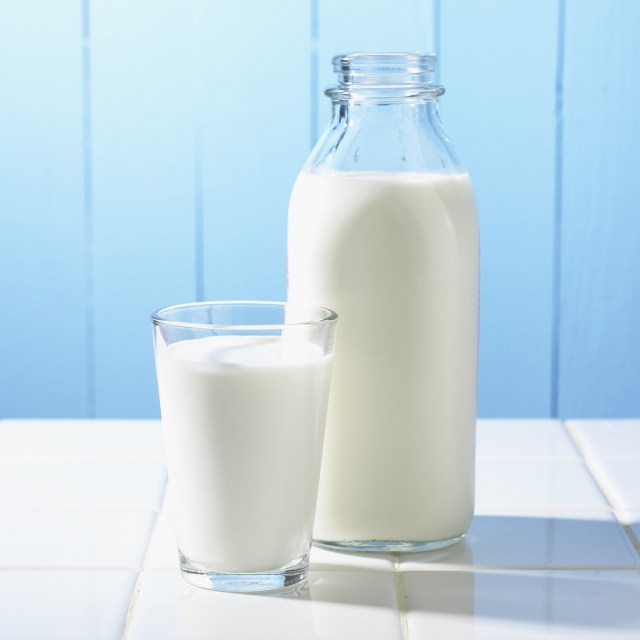
n. Milk; a wet nurse; breast. Lit., breast liquid. 

My cousin’s husband, in Denmark (shout out to Jon!!!), is making an effort to learn Hawaiian before they make a trip here. He was impressed that words related to milk are similar and sensible (you will see on subsequent days this week).

Today’s word, waiū, literally means liquid/water (wai) [from the] breast (ū). We get all our dairy products from waiū, no matter what mammal it may be, whether it is pipi (cow) or kao (goat). We don’t refer to soy milk or coconut milk as waiū because those are not made from any mammal’s ū (breast, teat, udder).

You will see, as the week progresses, how many of the words this week will contain waiū because milk is the base product.

Maikaʻi ka waiū no ka pēpē – Breast milk is good for babies.

Pipiʻi ka waiū ma Hawaiʻi – Milk is expensive in Hawaiʻi (and this is a FACT).

Ka ʻai hūnā i ka poli – The food hidden in the bosom (breast milk).

Glass and Bottle of Milk bxp159810h

Glass and Bottle of Milk bxp159810h

Posted in Uncategorized | Leave a comment

Leʻaleʻa ka ʻōlelo i ka pohu aku o loko

Conversation is pleasant when the inside is calm

And the inside is calm because the people are full! They have eaten! The hunger has been satisfied.

This is an ʻōlelo noʻeau that Hawaiians have perfected. You want a good turnout at a function/meeting? SERVE FOOD! Pūpū, salad, main dish, no matter. They WILL show up. And they will be happy. This saying is evidence of why one should consider serving food of some sort at the next gathering. feed them first and they will be calm inside. No big arguments. People are much better listeners when they are satisfied. Feed the body. Then feed the soul. Hey, there is a good reason why paʻina is the same word for “to eat a meal” and “to party”.

Posted in Uncategorized | Leave a comment

1. vt. To cast or troll, as for bonito, ʻahi, and kala. (PPN sii.)

2. nvt. Dysentery, diarrhea; to flow, hiss; to purge. 

Wouldn’t you know it. At first I am dreaming (moemoeā) a good one. Then I had a cold (anu) and now there is in my midst. But rest easy, my friends. Tis my new pup, Bū, who has a bit of a issue. Yup. My shihtzu bishon has a case of the . Diarrhea. I hope he’s going to be okay. At the very least, his bout of whatever is ailing him is the inspiration of yet another random word of the day for all of you. Because whatever is ailing him, you know, is ailing me. Everytime he has to go, I have to take him to go. Or clean up the aftermath. Good times, for sure!

Pilikia ʻo ia i ka – He is troubled by diarrhea.

Ua loaʻa ʻo ia i ka – He has diarrhea (or, more appropriately and literally, diarrhea has him).

IMG_7981

Posted in Uncategorized | Leave a comment