Hoʻonui ʻike

Enrichment; to enrich, i.e., to increase knowledge.

I love the fact that we are never to old to learn (and the adage that you cannot teach an old dog new tricks means nothing to me). I relish opportunities to hoʻonui ʻike – increase [my] knowledge.  This word can be found in the dictionary, Māmaka Kaiao, a dictionary with “new” Hawaiian words (but really not so new anymore).  Though this word may not be found in the older Elbert/Pukui dictionary (and I know many of you have this treasured book in your collection), it is not a new word per se.  Hoʻonui literally means to increase (hoʻo- to cause; nui – big).  ʻIke is the Hawaiian word for knowledge (although it goes much deeper than that…to know, to see, to understand).  Hoʻonui ʻike – to increase knowledge.

Hawaiians know the value of knowledge and its application (what good is knowledge if you don’t put it to use for the betterment of life and the earth?) It is apparent in these ʻōlelo noʻeau:

ʻAʻole pau ka ʻike i ka hālau hoʻokahi – Not all knowledge is taught in one school.

Ua lehulehu a manomano ka ʻikena a ka Hawaiʻi – Great and numerous is the knowledge of the Hawaiians.

I ʻolaʻolā nō ka huewai I ka piha ʻole – The water gourd gurgles when not filled full (A person not very well informed talks more than one who is).

E lawe i ke aʻo a  mālama, a e ʻoi mau ka naʻauao – He who takes his teachings and applies them increases his knowledge).

So fortunate to hoʻonui ʻike this past weekend at the ʻAimalama Conference. Learning how other Pacific Island groups use the lunar calendar (not our typical Gregorian calendar) to guide their daily/seasonal actions was enlightening and refreshing. Hearing how schools are helping students tap into their abilities to observe, learn, analyze and determine next steps made me hopeful for our future. Seeing how climate changes are affecting our ocean bounty and precious island resources is concerning. But knowledge is power. And armed with information can help us make better decisions.

Take the time to expand your horizons, learn more, keep an open mind and an open heart.  Be a model for your children and grandchildren, colleagues and friends. Hoʻonui ʻike.  Expand your knowledge.

Copyright: 2015 – Liana Iaea Honda. All rights reserved. All versions of “He Momi e Lei ai”, in its entirety, past and present, is the property of L. K. I. Honda. Reproduction and use of any kind other than the sharing of this website is prohibited. Alteration to the original content in any form is prohibited in every and any instance, and use in any other variant is prohibited without written consent of the author. Adress inquiries to: hemomi [at] gmail.com. Definitions and wise sayings are from: Hawaiian Dictionary by Pukui and Elbert, 1986. ʻŌlelo Noʻeau – Hawaiian Proverbs & Poetical Sayings by Mary Kawena Pukui, 1983.

Posted in Uncategorized | 1 Comment

Hōʻā

1. vt. To set on fire, burn, ignite, etc. (See ʻā 1. nvi. Fiery, burning; fire; to burn, blaze. Fig., to glitter or sparkle, as a gem; to burn, as with jealousy or anger.

Hōʻā is comprised of hō which is a causative and ʻā – burning/fiery. Put together and it means to set or cause a fire, or to burn. In modern terms, we use hōʻā for “turn on”, as a light or lamp. Hōʻā i ke kukui – turn on the light/lamp.

Hōʻā i ka lama – Ignite the torch.

maxresdefaultOn the surface, this is a shout out to everyone who loves our ʻāīna, who is concerned about climate change, who wants to conserve energy. During the mahina piha (full moon), it is a call to people to turn off all your lights and energy use in the evening (pō) and hōʻā i ka lama – ignite a torch or candle(s) and through this one act you not only conserve energy, but you cause a shift in how you operate on a nightly basis in all of your habits. This one simple act will help you to listen to others, listen to yourself, hear the sounds or kani from the environment rather than your tv or radio (btw-hōʻā i ka lama also means to put those devices down).

Beside the hōʻā i ka lama movement I am sharing hōʻā with you  because a fire was set inside of me this weekend at the ʻAimalama Conference held at UH Mānoa. Mahalo to Kalei Nuʻuhiwa and all the other brilliant minds who conceptualized, planned and birthed this conference focused on the lunar calendar and climate change. This conference acknowledged and honored  the ancestral knowledge we all hold. And if we don’t hold it, then we learned that we should seek it from whatever sources, including practitioners. But we can trust that which we know. And if we do know, then we need to teach others that didn’t learn it. In the words of Mac Poepoe, “If your father didn’t teach you, then I am going to teach you.”

Look to the past and adapt for the present and future. Change is happening on our earth. Observe and take action.

And because of this conference 300+ participants are going back to their homelands, spread throughout the moana Pākīpika, ignited with a desire to do more, be better and affect change. Ua hōʻā ʻia – [We] have been ignited.

More on my big takeaways this week. Stay tuned.

ʻAʻohe ʻike o ka puaʻa nona ka imu e hōʻā ʻia nei – The pig does not know that the imbue is being lighted for it (said of a person who is unaware that he is being victimized).

He manini ka iʻa mai hōʻā i ke ahi – The fish is just a panini, so do not light a fire (said to one who suffers defeat in a practice session: “This occasion is a mere panini, a small fish, so do not let your temper be kindled.”)

He moʻa no ka ʻai i ka pūlehu ʻia; he ahi nui aha ia e hōʻā ai? Food can be cooked in the embers; why should a big fire be lighted? (A small love affair will do; why assume the responsibilities of a permanent mastering? Said by those who prefer to love and leave.)

Posted in Uncategorized | Leave a comment

ʻOle

1. n.v. Not, without, lacking; to deny; zero, nothing, nought, negative; nothingness, nobody; im-, in-, un-. Cf. ʻaʻole, mea ʻoleʻoleloa. Maikaʻi ʻole, not good; bad. Paʻa ka ʻole i ka waha, holds “no” in the mouth. Na wai e ʻole ka hoʻohihi i ka nani o Leahi? Who can help taking a fancy to the beauty of Diamond Head? ʻAʻohe āna hana, hana ʻole, there is no work he won’t do. E ʻole nō ʻoe, if it weren’t for you; [sarcastically] you think you are indispensable! Na wai ʻole nō ka nele i ka ua mea o ka piliwaiwai? Who could help being poor with so much gambling? ʻOle wale, useless. ʻAʻole e ʻole, undoubtedly, of course. Eia aʻe ʻo ʻole wale mā, here come Mr. and Mrs. Nobody [insulting]. ʻAʻole e ʻole kona hele i kēia lā, there’s no doubt of his going today. He ʻole manawa ʻino (FS 245), don’t be cruel. hō.ʻole To deny, refuse, reject, veto, contradict, prohibit, protest, nullify, disclaim, renounce, repudiate; refusal, denial, negative. Hōʻole loa, to deny or refuse absolutely. Hōʻole ʻino, to spurn. Hōʻole Akua, to deny the existence of God; atheist. Hōʻole lama, temperate; teetotaler. Hōʻole wai ʻona, prohibition of intoxicants. Hōʻole Pope, Protestant; lit., deny Pope. Hōʻole pule, to deny authority to act as a priest. Hōʻole ʻana, waiver. (PEP kole.)

2. (Cap.) For nights of the moon beginning with ʻOle see below and Malo 31, 32, 35. Collectively these nights were called nā ʻOle; they were considered unlucky for fishing, planting, or beginning any important activity because ʻole also means nothing. 

Still on the mahina/malama (moon) phase. lol. Today’s “momi”, ʻole, refers to #2 above (although #1 and #2 are definitely related). There are four moons as it is waxing that are known as ʻOle – ʻOlekūkahi, ʻOlekūlua,ʻOlekūkolu, ʻOlepau. And there are three ʻOle moons on the waning: ʻOlekūkahi, ʻOlekūlua, ʻOlepau.

Keep in mind what #2 says above. Unproductive is the word that stands out. If you can’t seem to finish off projects you started or you are unsuccessful in your tasks, you might want to check if it is an ʻOle kind of moon. More often than not, it may be an ʻOle moon. Your best of the days would be the ʻOlepau days. ʻOle is pau so go for it. You may experiences some success.

I do believe the ʻOle moons are done for now (last one was yesterday if my calculations are correct) and today is Huna. If you had a hard time the past four days, that might be the reason.

Eia kākou i nā ʻOle – here we are at the ʻOle nights [a time of poor luck].

Posted in Uncategorized | Leave a comment

Malama

1. n. Light, month, moon. (PPN ma(a)rama, malama.)

2. conj. Perhaps. Malama ulu mai ka ʻanoʻano, perhaps the seeds will grow.

Another name for moon, besides mahina, is malama. Please don’t confuse this word with mālama, meaning to care for.

While mahina and malama both refer to month as well as moon (see the connection between the moon cycle and month? It is all about the moon!!!!), we tend to use, in modern day, mahina for moon more often than not, and malama for month, more often than not.

8c84331c19058d11676ceac5acd7a25aHilinehu ka malama, kū ka nehu – Hilinehu is the month when the nehu fish appears.

Kāpeku ka leo o ke kai, ʻo hoʻoilo ka malama – When the voice of the sea is harsh, the winter months have come (first uttered by Hiʻiaka).

Makaliʻi ka malama, makaliʻi nā maka, makaliʻi nā nahele – Makaliʻi is the month in which people squint and plants grow stunted (A play on different meanings of makaliʻi).

ʻO Kāʻelo ka malama, kāpule ke kōlea – Kāʻelo is the month, the plovers are fat.

Nā hoa ʻaka o ke one hāuli o ka malama – Laughing friends–when the sands look dark in the moonlight (said of friends who will laugh and play in the moonlight but who will not lend a hand when daylight and labor needs to be done).

Kaelo. O ka eiwa keia o na malama ma ka helu Hawaii, a o Sepatemaba hoi i ka helu haole. O ka mea i kapaia ai keia malama he malama ua keia, a puluelo, a eloelo no hoi i ka pulu i ka ua. – Kāʻelo – This is the ninth month in Hawaiian counting, and September is its “English” reference. This month is called the rainy month, drenched in rain, and indeed, it is soggy, wet with rain. (Ka Hoʻoilina)

Posted in Uncategorized | Leave a comment

Mahina

1. Moon, month; moonlight.

2. Crescent-shaped fishhook.

3. Eye of the snail at the end of its horn.

4. Farm, plantation, patch.

5. A variety of onion, similar to silver onion.

6. A variety of sweet potato.

It is no secret that I am a lover of all things related to the mahina – moon. When I see the mahina in the night sky (or sometimes day sky), I am drawn to it. Its pull extends beyond that of the tides. Mesmerizing.

Hawaiians use the mahina and its phases to guide their decision-making in fishing and farming. The study of the mahina and all it is a full time endeavor.

Hina – goddess of the moon and mother to the demi god Māui. Her name can be found in the word mahina. Hina is also mother to Molokaʻi (Molokaʻi nui a Hina).

This weekend is the ʻAimalama Conference, the Pacific People’s Lunar Conference on Climate Change. I, for one, am grateful for the opportunity to participate in a very small way, to listen to the wisdom of Pacific Islanders. “Kaulana Mahina (Hawaiian lunar calendar) is a proficient tool to note baselines for healthy environments followed by tracking changes that are occuring daily, seasonaly, annually, and episodically.” This is exciting stuff.

Stay tuned for more words related to our mahina.

Posted in Uncategorized | Leave a comment

Hopena

  1. n. Result, conclusion, sequel, ending, destiny, fate, consequence, effect, last.

Sometimes (actually, a lot of times) the Hawaiian language is so much simpler and to the point than English. Let’s use today’s He Momi for example. Look at all the translations. They all mean relatively the same thing: that which comes in the end. That’s exactly what hopena means: ending. We can take the “root” word of hopena which is hope (which is not pronounced like hope as in faith, hope and love. This one is pronounced like (Ma) Hope Joe for you old timers in Hawai‘i). Hope literally means after, behind, last, late. The –na is something like a suffix, kind of like end-ing.

What made me come up with today’s He Momi, hopena? It’s Aloha Friday!!! I always look forward to the hopena pule – weekend!

Here are some examples:

I hopena pule maika‘i  – Have a good weekend.

E ‘ike ana ‘oe i ka hopena o ia hana – You will see the result of those actions.

He hopena luahine/‘elemakule – the result of being an old lady/man.

Copyright: 2015 – Liana Iaea Honda. All rights reserved. All versions of “He Momi e Lei ai”, in its entirety, past and present, is the property of L. K. I. Honda. Reproduction and use of any kind other than the sharing of this website is prohibited. Alteration to the original content in any form is prohibited in every and any instance, and use in any other variant is prohibited without written consent of the author. Adress inquiries to: hemomi [at] gmail.com. Definitions and wise sayings are from: Hawaiian Dictionary by Pukui and Elbert, 1986. ʻŌlelo Noʻeau – Hawaiian Proverbs & Poetical Sayings by Mary Kawena Pukui, 1983.
Posted in Uncategorized | 2 Comments

Ōlaʻi


1. n. Earthquake, tremor. 

Yesterday, Chile had an 8.3 magnitude ōlaʻi. Whoa. Residents of Hawaiʻi are familiar with ōlaʻi. Hawaiʻi Island residents experienced a traumatizing ōlaʻi Oct. 15, 2006, particularly residents in the north and western sides of the island. I remember it well and spent a good deal of time cleaning up the rubble in the house, namely broken glass in the kitchen and picking up fallen frames and toppled over dressers and knickknacks. I was grateful that we still had a home with no structural damage, unlike the Catholic church at the bottom of our hill.

Hawaiʻi is always alert to ōlaʻi that occur in our Pacific waters as a tsunami could be generated.

Ōlaʻi ikaika loa i ʻike ʻole ʻia kona lua – Very strong earthquake, the like of which had never been seen before.

Here are a couple of excerpts from newspapers in the 1800s:

HE OLAI.- I ka po 15 o Feberuari, haalulu ikaika ka honua ma ke kulanakauhale o San Francisco, Kaleponia, puiwa nui na kanaka a holo iwaho e nana i ke ano o keia mea. Iwakaluakumamalua kekona ka haalulu ikaika ana. Aole nae poino nui ka waiwai, hina kekahi pa, a maha ka puna o kekahi mau hale. (Mar 18 1856)

(Translation – AN EARTHQUAKE – On the night of February 15, the earth shook vigorously in the city of SF, California, the people were very surprised and ran outside to see what was happening. The shaking lasted 22 seconds. There was not a lot of great destruction, some walls fell, as well as the plaster of some homes [not real sure about that part])

Here is another:

I ka po o ka la pule iho nei, he olai hou no ma Honolulu nei. O ka lua keia o ke olai ana iloko o keia mahina. Aole nae i naueue nui ka honua e like me kela olai mamua iho nei. Ua kupikipikio maoli ke kai, a eu mai no na nalu, me he mea la, ua luliluli ia ke awa e like me ka luliluli ana o ke pa holoi ma ka lima o ke kanaka.
 (Dek 26 1861)

(Translation – Last Sunday night, there was another earthquake in Honolulu. This is the second earthquake this month. The earth, however, did not tremble much like that last earthquake. The ocean was indeed rough, and the waves active, the harbor swayed as if it were a wash basin being used by someone.

Copyright: 2015 – Liana Iaea Honda. All rights reserved. All versions of He Momi e Lei ai”, in its entirety, past and present, is the property of L. K. I. Honda. Reproduction and use of any kind other than the sharing of this website is prohibited. Alteration to the original content in any form is prohibited in every and any instance, and use in any other variant is prohibited without written consent of the author. Adress inquiries to: hemomi [at] gmail.com. Definitions and wise sayings are from: Hawaiian Dictionary by Pukui and Elbert, 1986. ʻŌlelo Noʻeau – Hawaiian Proverbs & Poetical Sayings by Mary Kawena Pukui, 1983.

Posted in Uncategorized | Leave a comment

Hoaka

1. n. Crescent; arch, as over door of ancient house (Kep. 101); crescent-shaped design at base of temple drum; crest, as on a helmet.

2. (Cap.) n. Second day of the month. (Kep. 101) (PCP (F,S)oata, cf. Easter oʻata.)

3. nvi. Brightness; shining, glittering, splendid; to glitter, shine, flash as lightning, become daylight; to flame. 

4. v. To cast a shadow; to brandish, as a spear (2 Sam. 23.18), to drive away, ward off, frighten. Cf. aka 1. Mai hele maʻō e hoaka ai i ke kai o holo ka iʻa, don’t go over there and cast your shadow in the sea lest the fish run away.

5. vt. To open, as the mouth. (Hoik. 13.6.)

6. n. Spirit, apparition, ghost (For. 6:370). Lele ka hoaka, the spirit has flown [of death; the glory of the land has departed].

7. n. Disease of the abdomen, perhaps appendicitis, rupture (followed by a qualifier). See hoaka ʻīpuka hale, hoaka kākala. Other qualifiers reported are hāwele, kū, kū kahi, kū lua.

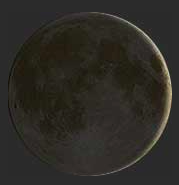
So I am staying a bit on the moon theme for as long as the mood suits me. Yesterday’s word, Hilo, reflected the moon on Sunday. Today’s word, Hoaka, reflects yesterday’s moon.  And like the shape of the actual moon, hoaka is also the word for crescent.  As far as the moon phase is concerned, it is a good time to plant, especially tuber plants, say ʻuala (sweet potatoes).  Also a good time to go torch fishing on the reef.

Screen Shot 2015-09-15 at 6.28.32 AMInteresting that hoaka is also a spirit or ghost. Not sure if it is because a part of the word, aka, means shadow. I am just drawing my own conclusions here.

Having a moʻopuna (granddaughter), Hulali, whose name means glittery or shining, I like this word, hoaka, because it has a similar meaning.

Lele ka hoaka – The spirit has flown away (someone has died).

Muku ka malama; Hilo nei, kau ka Hoaka – Muku is here, Muku the moon; Hilo comes next, then Hoaka (Part of a child’s chant for learning phases of the moon.)

Aia hiki mai ka la o Hoaka oia ka wa e kanu ai, e kanu e like me ka mea i hoike ia maluna… – When the day of Hoaka arrives, that is the time to plant, plant as was noted above…(from Fornander)

Posted in Uncategorized | Leave a comment

Hilo

1. nvt. To twist, braid, spin; twisted, braided; threadlike; faint streak of light. See lei hilo. Ua hilo ʻia i ke aho a ke aloha, braided with the cords of love. He olonā i hilo ʻia (Puk. 26.1), fine twined linen . hoʻo.hilo Caus/sim. Rare. (PPN filo.)

2. (Cap.) n. First night of the new moon. See Malo 35. (PCP filo.)

3. (Cap.) n. Name of a famous Polynesian navigator for whom the city and district may have been named. See sayings, Hilo(Eng.-Hawaiian) (PCP filo.)

4. Same as mauʻu HiloHilo grass.

5. n. Gonorrhea; a running sore (Oihk. 15.3).

6. n. A variety of sweet potato.

7. See iwi hilo.

Yesterday’s moon was Hilo (sorry, no posts on Sundays!). You can see for #2 above, it is the first night of the new moon. If the skies are clear at night, it should be nice and dark. Tonight’s moon is Hoaka.

Hilo is also the location of one of my favorite towns. According the Place names of Hawaiʻi book, there are three sections of Hilo: Hilo One (sand Hilo) near the sea; Hilo Hanakahi, an inland section toward Keaukaha; and Hilo Palikū (Hilo of the upright cliff), east of the Wailuku River. It is not clear to me whether Hilo was named after the first moon or a Polynesian navigator, but what is known is that Hilo is frequently referred to as Hilo Hanakahi, Hanakahi being a famous chief of Hilo and a symbol of peace. Famous, also, is the name of Hilo’s rain, ua kani lehua, the rain which sounds upon the lehua.

The twisting style of lei making (think ti leaf) is referred to as “hilo” style.

hilo demo

Ugh, we don’t need to go into the gonorrhea thing (#5 above).

Hilo ʻāina ua lokuloku – Hilo fo the pouring rain (especially if there is going to be a county fair or Merrie Monarch)

Hilo i ka ua kinakinai, ka ua mao ʻole – Hilo of the constant rain, where it never clears up.

Hilo iki, pali ʻeleʻele – Little Hilo of the dark cliffs

Hilo mahi haʻaheo – Hilo of the proud farmers

Hilo nahele paoa i ke ʻala – Hilo, where the forest is imbued with fragrance.

Hilo ʻia a paʻa – Twisted and made firm (a marriage).

Posted in Uncategorized | Leave a comment

Haliʻa

nvt. Sudden remembrance, memory, especially of a loved one; fond recollection; premonition; to recall, recollect fondly. Haliʻa aloha, cherished or loving memory; to remember fondly. hoʻo.haliʻa To evoke reminiscence or recollection; remembrance; to remind.

Today, this week, is a time of remembrance. We have lost loved ones this week and today we remember, fondly, haliʻa, the passing of too many on the east coast with the tragedy known as 9/11.

9-11-light-memorial-e1315504442332-475x298I love that the Hawaiian language has one word that encompasses those fond memories, especially loving memories of people we hold dear. Haliʻa aloha is a bit of a reduplication of the term. Haliʻa already conjures up images of fondness but you frequently will have aloha following it, reduplicating the manaʻo.

E kau mai ana ka haliʻa no sweet tubarose poina ʻole – A fond memory comes to me of the sweet tuberose, so unforgettable (from the mele “Sweet Tuberose” by Charles E. King)

He oiaio, ua lalapa ae la ke aloha iloko ona, olino ae la ka halia a nopu hulili ae la ka weli hoomanao no kana Aliiwahine – Truthfully, aloha is rising up from within, fond memories shining forth  and fearful thoughts are springing to mind for his chiefess (written about Kalākaua in thinking of his wife, Chiefess Kapiʻolani, as he travels to Japan.)

Na kulu waimaka a ke aloha (teardrops of love)
Me oe ke aloha waimaka nui (with you these tears of love)
Me a’u ka halia e waiho ai  (with me memories remain)
(Nūpepa Kūʻokoʻa Buke 1, Helu 14 1 Malaki 1862)

Posted in Uncategorized | Leave a comment