Haʻalele

vt. To leave, desert, abandon, forsake, quit, resign, abdicate, discard, give up, reject, leave unfinished.

Photo courtesy of hokulea.com

Photo courtesy of hokulea.com

Aw. This can be such a sad word. To leave and desert. Abandon and forsake. But like many words, no matter the language, it is all in the perception. Haʻalele can seem like a permanent departure. But it can also just refer to one leaving, as in going on a voyage. Who knows. This person may come back. May not. Regardless. Haʻalele. To leave.

Take for instance the crew that is about to haʻalele iā Hawaiʻi to head for Bali on a jet plane. Another leg of the Hōkūleʻa worldwide voyage. They are merely going to Bali to jump on a double hull canoe to sail the open ocean to the next port. No big deal right? Oh itʻs a heck a big deal. This has never been done before. No Hawaiian sailing canoe has ever left the Pacific Ocean. And without the use of modern navigation tools. And now look. How smart. I glow with pride at how akamai our Hawaiians were/are. While haʻalele typically refers to a departure, it is not necessarily a reflection on the conclusion of the story. As far as the Hōkūleʻa is concerned there will be a return (hoʻi) of the crew heading out to unchartered territory. Just wanted to give a shout out to all our holo waʻa who are returning to our islands and those departing.

Fair wind and following seas.

Posted in Uncategorized | Leave a comment

  1. n. Sugar cane
  1. nvi. Dragged, towed, wind-borne; long, as a vowel sound; to drag, push, prolong, tow, drawl; to hold a note for several beats in singing or chanting; pull, tug, massage.
  1. vi. To fulfill, come to pass, succeed, do, complete, foreclose; to win in dispute; to become pregnant; fulfilled.
  1. vt. To break up lumps in poi by pressing against the side of a container.
  1. n. Second note in musical scale, re.
  1. n. and interj. A call to pigs, fowl. Also kolo, kolo, kolo.

There are numerous meanings for today’s He Momi, . In fact, if you would like an elaboration on each meaning all you need to do is go to the Hawaiian English Dictionary (Pukui/Elbert).

A lot of people know sugarcane as , in fact, the Hawaiian word for sugar is kōpaʻa (=sugarcane; paʻa=solid…solid sugarcane). A well known ʻōlelo noʻeau with  is:

Pua ke kō, kū mai ka heʻe

When the sugarcane tassels, heʻe season has arrived

(this usually happens in late October, early November)

I would like to focus on the 3rd translation, that is, the use of  to mean fulfill, complete. If you did something and completed it to fruition, ua – it’s done, completed. Ua ka hana – The task is completed. Ua ka ʻiʻiini – the desire has been fulfilled. If you NEED to do a task or you want someone to complete a task the word is hoʻokō – to fulfill, to complete. In other words, putting the hoʻo– in front of  means you need to put some action into the word – e hoʻokō i ka hana – complete the task.

Ua  ka hana no ka pono o kākou – the work has been fulfilled for the “pono” of the people.

E hoʻokō i kou kuleana – Fulfill your responsibility.

Copyright: 2015 – Liana Iaea Honda. All rights reserved. All versions of He Momi e Lei ai”, in its entirety, past and present, is the property of L. K. I. Honda. Reproduction and use of any kind other than the sharing of this website is prohibited. Alteration to the original content in any form is prohibited in every and any instance, and use in any other variant is prohibited without written consent of the author. Adress inquiries to: hemomi [at] gmail.com. Definitions and wise sayings are from: Hawaiian Dictionary by Pukui and Elbert, 1986. ʻŌlelo Noʻeau – Hawaiian Proverbs & Poetical Sayings by Mary Kawena Pukui, 1983.

Posted in Uncategorized | Leave a comment

Palapala

1. nvt. Document of any kind, bill, deed, warrant, certificate, policy, letter, tract, writ, diploma, manuscript; writing of any kind, literature; printing on tapa or paper; formerly the Scriptures or learning in general; to write, send a written message.

Pah lah pah lah

Halau Mohala Ilima

Halau Mohala Ilima

This word came to me because just the other day someone was asked to apply for a certain job vacancy, and she said, “I cannot, I no more the palapala,” meaning she did not have a degree. Degree, shmegree. We ALL know that the palapala doesn’t say it all. In all ways but that, she was WAY qualified for the job.

Back in the days of our kupuna, an expert in any given field, whether it be medical (such as a kahuna hānau keiki – obstetrician) or otherwise (such as a kahuna kālai waʻa or canoe carver) had no need for a palapala. Their skill level was determined by the kahuna they trained with after years and years of instruction, which included a lot of OJT. Competency in the field was measured by ability, not by completion of required courses and fulfillment of a research project or thesis. Palapala today proves that one has completed required course work and possibly a lengthy project. It does not necessarily mean that someone is competent, has common sense and able to function successfully in a given expertise. I have known teachers who have graduate degrees and National Board certification and they are an embarrassment to education. And others who are fresh out of college with just an undergraduate degree and they do fabulously.

Today we have kumu hula who have trained for years to reach a certain level of expertise (myself included). We also have those who are reaching new levels in lua (Hawaiian martial arts), navigation, and visual arts. A palapala can never truly attest to their expertise. Ma ka hana ka ʻike. In doing, one knows. Perhaps we need to return to this method of education: extensive training from a very young age (maybe this would do our “failing” high school students much better), hands on, in the field, real life experience, and that all important spiritual component, paying attention to signs all around, in the nuances, and in the belief that there are higher powers in existence. No need the palapala.

He aupuni palapala koʻu; ʻo ke kanaka pono ʻo ia koʻu kanaka – Mine is the kingdom of education; the righteous man is my man. (Uttered by Kamehameha III.)

Copyright: 2015 – Liana Iaea Honda. All rights reserved. All versions of He Momi e Lei ai”, in its entirety, past and present, is the property of L. K. I. Honda. Reproduction and use of any kind other than the sharing of this website is prohibited. Alteration to the original content in any form is prohibited in every and any instance, and use in any other variant is prohibited without written consent of the author. Adress inquiries to: hemomi [at] gmail.com. Definitions and wise sayings are from: Hawaiian Dictionary by Pukui and Elbert, 1986. ʻŌlelo Noʻeau – Hawaiian Proverbs & Poetical Sayings by Mary Kawena Pukui, 1983.
Posted in Uncategorized | Leave a comment

Makemake

1. nvt. Desire, want, wish; to want, like, prefer, favor, wish; willing (often replaced colloquially by mamake). See make 2. E mālama ʻia Kou makemake, may Thy will be done. hoʻo.make.make To cause or feign desire.

mah keh mah keh

I was looking in the Hawaiian dictionary for the correct word for will. My intent was to find the word for will, as in “last will and testament.” That turned out to be palapala ho‘oilina (legacy document) or palapala kauoho (document of testament/order). My thoughts weigh heavily this week on the rights and responsibilities of the Hawaiian people in their own homeland. Then I was drawn to the second meaning of will, that is, desire: makemake. Isn’t that what a will is? A desire to leave certain possessions, such as land, to someone, say, like the Hawaiian people. A will might also include the use of the properties and monies for certain purposes, to benefit a certain person or group of people. Makemake. And I think my makemake (desire) to use this week’s He Momi is rooted in the desire of MANY (and I am referring to all ethnicities, worldwide) to protect Mauna Kea. Our sacred mountain. Mauna a Wākea. The mountain of Wākea, sky father. When is it that the makemake (will, desire) of the protectors of our ʻāina (that which nourishes us) will be honored? When will we put the value of our land ahead of all economic gain? Is it after it is so polluted that we cannot grow anything on it (makes me reflect on the cyanide that was found in the soil at a school on my island) or the water is undrinkable because we didn’t manage our resources in a pono manner? If you wait till then how is your economic gain going to help you? Bad enough we import just about everything and buy bottled water. Gee. E hoʻi i ka makemake a ka poʻe aloha ʻāina – Return to the will of those that love the land. Makemake au e mālama i ka mauna – I want to take care of the mountain.

Kū Kiaʻi Mauna

Kū Kiaʻi Mauna

Copyright: 2015 – Liana Iaea Honda. All rights reserved. All versions of He Momi e Lei ai”, in its entirety, past and present, is the property of L. K. I. Honda. Reproduction and use of any kind other than the sharing of this website is prohibited. Alteration to the original content in any form is prohibited in every and any instance, and use in any other variant is prohibited without written consent of the author. Adress inquiries to: hemomi [at] gmail.com. Definitions and wise sayings are from: Hawaiian Dictionary by Pukui and Elbert, 1986. ʻŌlelo Noʻeau – Hawaiian Proverbs & Poetical Sayings by Mary Kawena Pukui, 1983.

Posted in Uncategorized | Leave a comment

ʻŌlelo

Language, speech, word, quotation, statement, utterance, term, tidings; to speak, say, state, talk, mention, quote, converse, tell; oral, verbatim, verbal, motion.

ʻOH-leh-loh

“Sticks and stones may break my bones but names will never hurt me” and so the saying goes. I never did get this because names DID hurt me and sometimes worse than the sticks and stones! The pain lasts longer.

The most poignant display of the power of the ʻōlelo, language, in Hawaiian, is this ʻōlelo noʻeau (wise saying):

I ka ʻōlelo ke ola, i ka ʻōlelo ka make

In the language there is life, in the language there is death.

The ʻōlelo, in other words, holds the power of life and death. And so when you say something, it better be worth hearing. Hey, I wonder if this is why I get so impatient when people go on and on and on and you get my point.

In the language there is death? Heck yeah! There is a kahuna who knew that “magic”. So watch it. Watch what you say, watch your belongings, watch anything from your person (spit, urine, you name it but that is a whole new word of the day subject).

Yes, in the word there is death. It makes me sick when I hear parents (and teachers for that matter) belittle a youngster. Call them names (mostly unintentional). Think about it.  Babooze. Lōlō. Lazy. Good for nothing. Do you see how calling a child any of these names can, well, make them believe they might be a babooze? Or lōlō, lazy, or good for nothing? Yup. There is power in the word.

Hawaiians don’t say a lot. We pick our words carefully, use them as a necessity. There are so many other ways to communicate which are just as important. How you care for the ʻāina (land) and kai (ocean) is a means of communication. How you mālama your ʻohana. Body language. The eyes are a powerful tool to “speak” to people. Ma ka hana ka ʻike. In doing one learns. That is how we communicate. Do it. Be a model. A mentor.

But I digress. Point: be aware of your ʻōlelo – your language, speech, word. There is power in it. The power of life. The power of death. Hopefully you use it to bring life to others. To lift someone up. To help someone believe in their abilities.

ʻAʻole e ʻōlelo mai ana ke ahi ua ana ia – Fire will never say that it has had enough (the fire of anger or of love will burn as long as it has something to feed upon).

I lohe i ka ʻōlelo a hoʻokō, e ola auaneʻi a laupaʻi – One who hears good counsel and heeds it will live to see many descendants.

Leʻaleʻa ka ʻōlelo i ka pohu aku o loko – Conversation is pleasant when the inside is calm – Talk is pleasant when hunger is satisfied.

ʻŌlelo ka waha, holehole ka lima – The mouth talks, the hand strips (said of one who says friendly words yet does unfriendly deeds). Please don’t be “that” guy.

Paoa ka lawaiʻa i ka ʻōlelo ia o ka ʻawa – Unlucky is fishing when ʻawa is discussed (ʻAwa also means “bitterness.”)

Copyright: 2015 – Liana Iaea Honda. All rights reserved. All versions of He Momi e Lei ai”, in its entirety, past and present, is the property of L. K. I. Honda. Reproduction and use of any kind other than the sharing of this website is prohibited. Alteration to the original content in any form is prohibited in every and any instance, and use in any other variant is prohibited without written consent of the author. Adress inquiries to: hemomi [at] gmail.com. Definitions and wise sayings are from: Hawaiian Dictionary by Pukui and Elbert, 1986. ʻŌlelo Noʻeau – Hawaiian Proverbs & Poetical Sayings by Mary Kawena Pukui, 1983.

Posted in Uncategorized | 2 Comments

Haʻalulu

vi. To shake, quake, totter, tremble, quiver.

Okay, this is a word many people know. You know that feeling you get (or at least I do) when you have to get up in front of a large (or small) group of people? Those butterflies? You feel like a good strong drink of something might do you some good?  That is haʻalulu. All nerjous, as my friend would say. Or when you have a near accident and those knees just don’t stop shaking for a long time? Haʻalulu.

I get all haʻalulu when I have to talk in front of people. Or when a policeman pulls me over (ummm…yeah). Or a near accident. What makes you all haʻalulu?

Haʻalulu au ma mua o ka haʻi ʻōlelo – I tremble before a speech.

Nui ka haʻalulu ma ka lā mua o ke kula – [I] get really nervous on the first day of school.

Posted in Uncategorized | Leave a comment

kahua

Kahua Sunset

Kahua Sunset

Foundation, base, site, location, ground, background, platform, as of a house; an open place, as for camping or for sports, as for ʻulu maika or hōlua sliding; playground, arena, stand, stage, courtyard course, camp; bed, as of a stream. fig., declaration of principles or policy, doctrine, platform.

I had the privilege of performing a wedding on Saturday at Kahua Ranch. My understanding is that this beautiful ranch lies in the ahupuaʻa known by the same name: Kahua. I thought it was a perfect place for a wedding since kahua refers to a base or foundation and figuratively refers to a declaration of principles or policy. Kinda like marriage vows right? Promising to be there for each other in good times yada yada yada.

  • ʻO ke kahua ma mua, ma hope ke kūkulu – The foundation first, afterwards the building.

In other words, it is important to first lay a solid foundation. Once that is done, then you can begin to build upon it. This is true for things like building a house but also extends to things like learning how to read. And learning algebra is a bit difficult unless you have a solid understanding of simpler mathematics skills.

  • ʻAʻohe kahua o nā manu – There is no place of the birds to light (It is very crowded).
  • E hana mua a paʻa ke kahua ma mua o ke aʻo ʻana aku iā haʻi – Build yourself a firm foundation before teaching others.

Hoʻokahua – To lay a foundation, establish, found; to camp or be stationed, as soldiers; to settle down and develop a place, as homesteaders.

  • Hoʻokahua ka noʻonoʻo – settle down to a task with determination to see it through.
  • Koʻu noho aliʻi i hoʻokahua ʻia maluna o kahi puʻuʻ pele –  my kingdom established on a lava hill.
Posted in Uncategorized | Leave a comment

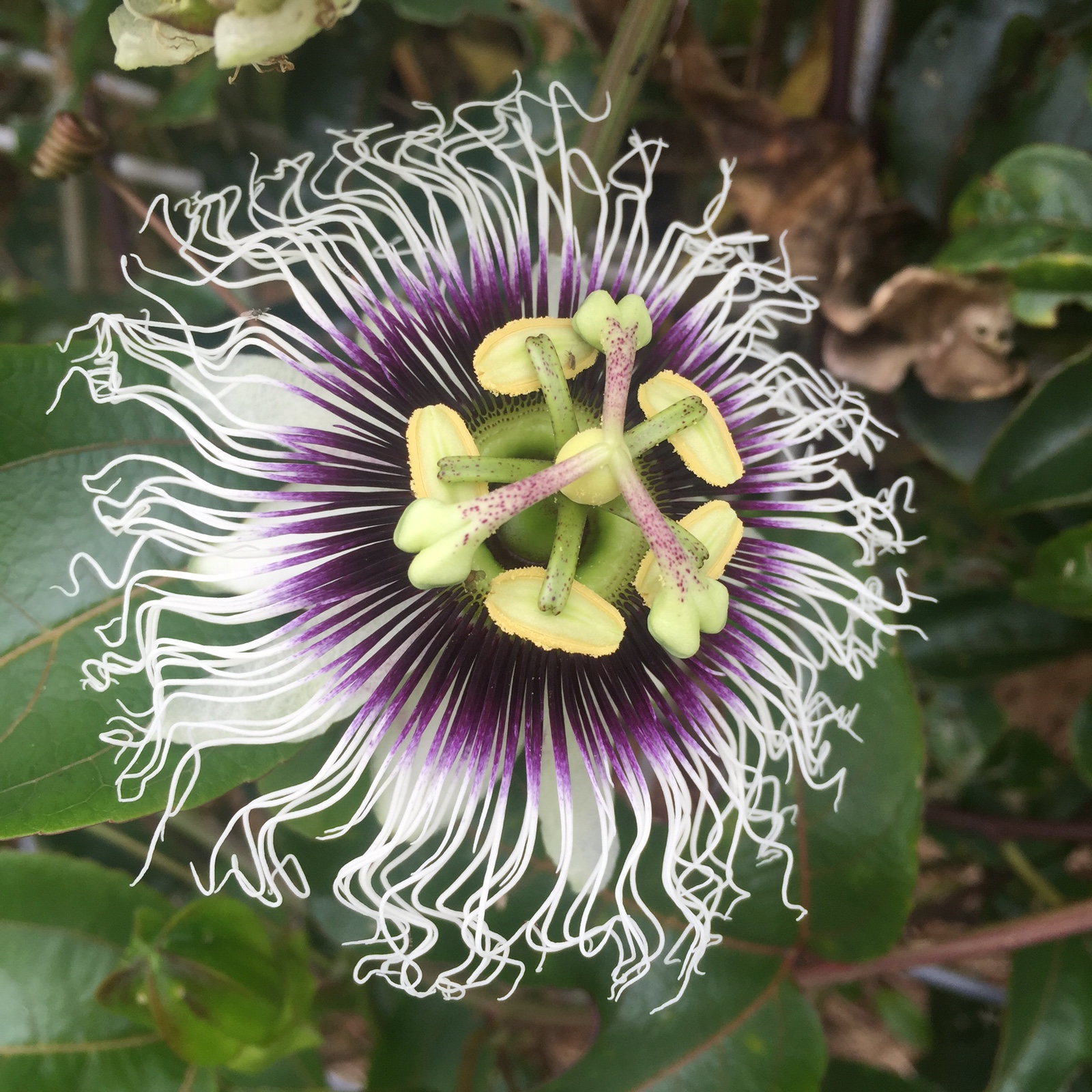
Lilikoʻi

IMG_4960.JPG

Pua Lilikoʻi

n. Passion fruit, purple water lemon, or purple granadilla (Passiflora edulis), an American vine with three-lobed leaves and edible dull-purple fruits about 5 cm long, growing wild in many forests of Hawaiʻi; said to be named after Lilikoʻi, Maui, where it was first grown. The yellow-fruited lilikoʻi (P. edulis f. flavicarpa), is similar but has yellow, better-tasting fruits; it is grown commercially in the Hawaiian Islands and used for desserts and beverages. (Neal 599.)

(lee lee koh ʻeeh)

I am getting excited. I saw flowers on my lilikoʻi vines. YAY! If you know me, you know I am a lover of all things lilikoʻi. Get ready, folks, I am a taker of all spare lilikoʻi you may have! Lilikoʻi butter, sorbet, syrup, juice. Got any other ideas?

My pet peeve, though, is when people pronounce this word without the ʻokina (glottal stop). Songs are the worst! They perpetuate the mispronunciation. They just run it together at the end — koi — rhyming with poi. That is a no-no. It is koʻi. ko.stopyourvoice.i. Koh-ʻee.

I never ever heard of a passionfruit in all of my childhood. A lilikoʻi was always a lilikoʻi to me. I didn’t even know it had an English name. Many people assume lilikoʻi is native to Hawaiʻi since we have so many food items devoted to it and it grows so prolifically but lilikoʻi is actually categorized as introduced/exotic to our islands. Post Captain Cook. So while we don’t necessarily like ALL the plants that have been introduced here (invasive species really do a number on our native plants), there are some that we adore. Lilikoʻi, for me, is one. How about for you? What is your favorite lilikoʻi dessert or food item? Or drink…

ʻOno ka lilikoʻi – Passionfruit is delicious.

ʻO ka lilikoʻi kekahi o kaʻu mau hua punahele – the lilikoʻi is one of my favorite fruits.

Posted in Uncategorized | 2 Comments

Pōmaikaʻi

nvi. Good fortune, blessedness, blessing, profit, prosperity; prosperous, fortunate, beneficial, blessed, lucky; good luck, improvement (of property), welfare, benefits. 

Yesterday morning I had the opportunity to go into the ocean in the early morning, a kapu kai of sorts (salt water purification) after welcoming the sun with E Ala ē. It is always a rejuvenating, refreshing experience to do so, especially as it marks the passing of, well, things you need to put behind you and the beginning of a new adventure, a new school year, a new beginning.  And so it is.

And I realized that I am, indeed, blessed. Pōmaikaʻi. So fortunate to be alive,  to learn new things everyday, to experience things that many do not get to EVER experience. I seriously have nothing to complain about. Pōmaikaʻi. So blessed.

When I was driving home from the beach, I saw a bird flying in the distance, soaring through the air, and I thought to myself, oh my, it’s an ʻio (Hawaiian hawk). That is an EXTRA blessing to me! HOW LUCKY AM I TO SEE AN ʻIO ON THE WAY HOME! And as I got closer, it landed on the telephone wire and I saw it was but a dove. And after a brief chuckle, I thought, while an ʻio is a sign of good fortune for me, I don’t really NEED signs. And at that particular moment I didn’t need anymore confirmation of how blessed I am. We create our own blessings each and everyday through the choices we make. We may not see those blessings right away, or understand them to be blessings but they are there.

Pōmaikaʻi au – I am blessed.

Pōmaikaʻi nā mea a pau – Everything is a blessing.

Pōmaikaʻi ʻole – unlucky

Hoʻopōmaikaʻi – to cause good fortune or blessings. (note: If you want to “bless” something, say the food, or someone, you would most likely use hoʻomaikaʻi rather than hoʻopōmaikaʻi.)

E hinu auaneʻi nā nuku, he pōmaikaʻi ko laila – Where the mouths are shiny [with fat food], prosperity is there (the prosperous have the richest food to eat).

Posted in Uncategorized | Leave a comment

Ukana

n. Baggage, luggage, freight, cargo, supplies. Kaʻa ukana, baggage car, baggage or freight vehicle.

Many of you traveled this summer, taking advantage of great weather and time off to get away, experience new adventures, learn new things. YAY FOR YOU! Did you have a lot of ukana?

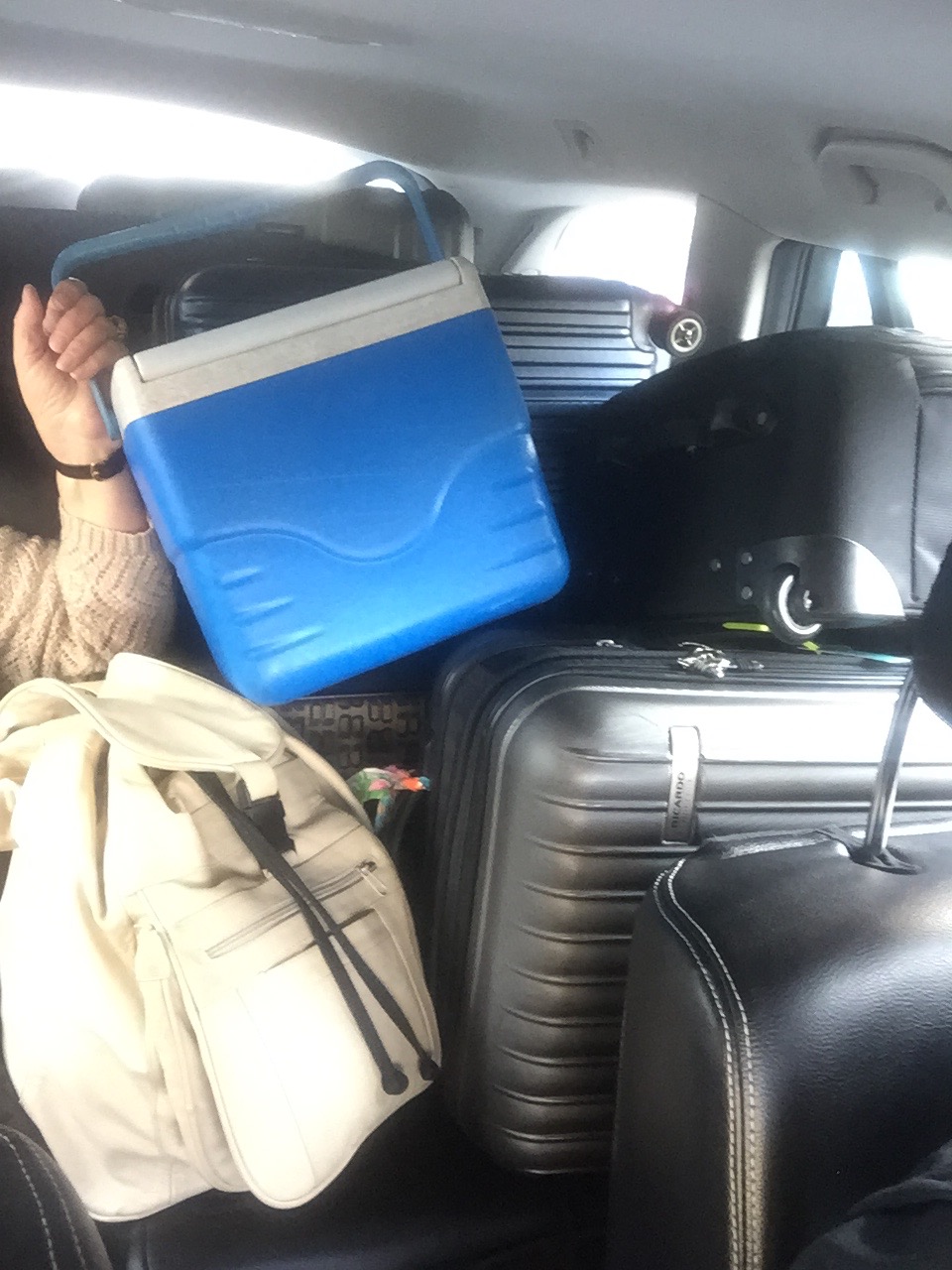
Just so you know, most (if not all) of my daily words are generated from my own points of pondering and daily experiences. This month, I had the good fortune to travel to Denmark (Kenemaka) with my ʻohana, including my mom who was born and raised there. Nine of us. For 16 days. Can you imagine the ukana? Pretty crazy, as you can imagine.

IMG_4903

Barely room for Mormor in the back seat.

Yup. That’s our ukana. And not even all of it. As we were leaving Copenhagen, I had to call a cab because the other option was to lug everything 1/4 mile to the metro station (which is how EVERYONE goes to the airport). So out of nine people (two of them young children), two of us (me and my mom) went in a cab and the cab driver stuffed in as many pieces of ukana, big and small, as possible, in his mid sized cab. We are talking 50 lb take it to the limit big ukana, a few medium sized rollies, and a million handcarts because since we can all take on two carry-ons then by golly, we will! Thankfully, the cab driver was a sport, a young man from Iraq, who was quite impressed with his tetris skills. He even took a pic of it so he could “snapchat” it. Lol.

Nui ka ukana – There’s a lot of baggage.

Ke mālama nei au i ka ukana a ke aloha (chant) –  I preserve the love carried [by me]

In the English language, baggage can be that which you travel with, but it can also refer to the “baggage” you carry in your life, whether it is your personal problems or heavy events that have affected your life. BAGGAGE. This ʻōlelo noʻeau is testament that it can be used in the same way in Hawaiian:

He ukana ko ka houpo – A burden on the diaphragm (A problem in the mind).

Posted in Uncategorized | Leave a comment