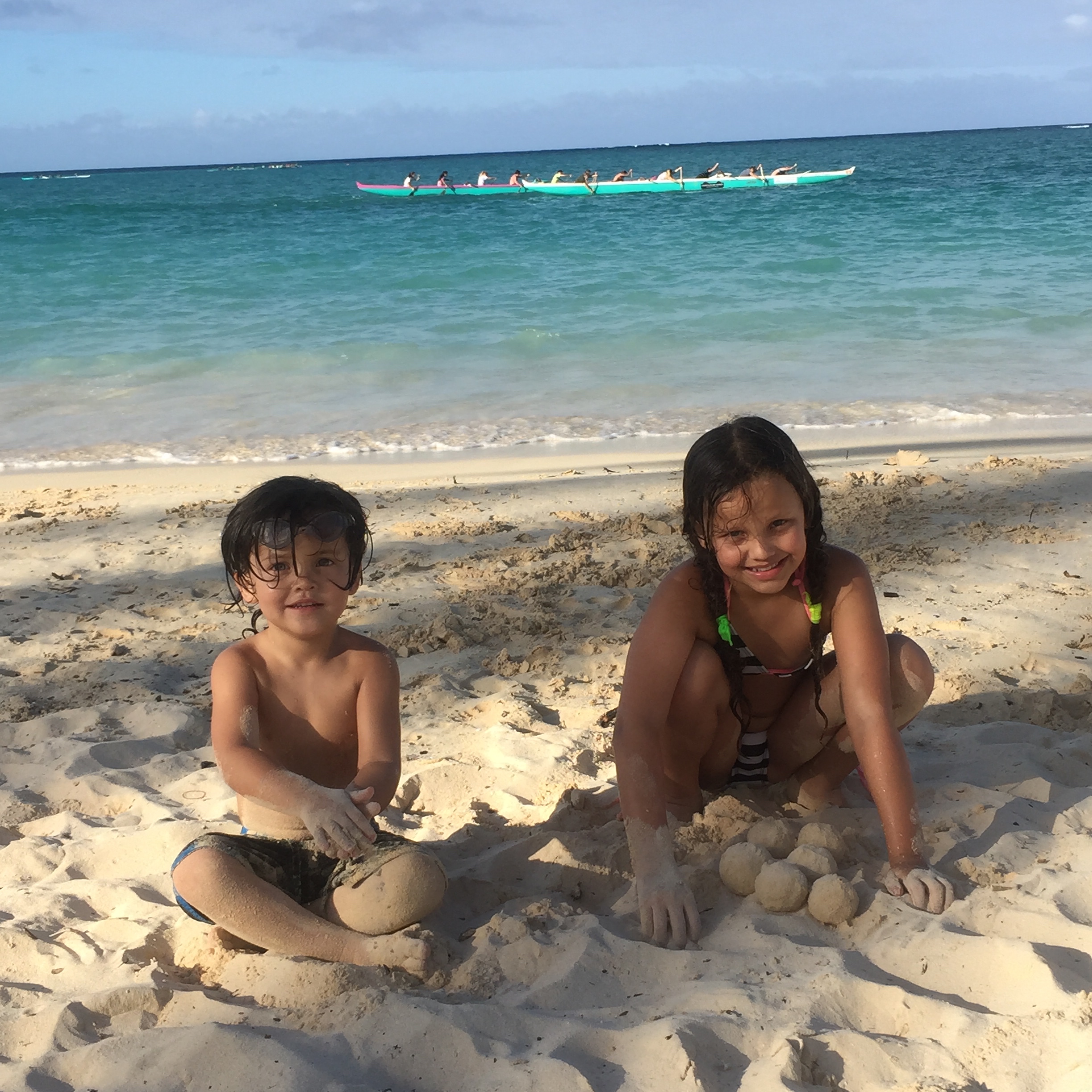
Hikina

1. East 

2. (Cap.) Orient.

3. Coming, advent.

School is starting all around us. Excitement is in the air. It’s definitely a time of new beginnings for students and teachers. The new school year always reminds me of a new start: new clothes for the kids, school supplies, and schedule adjustments. Craziness is about to commence.

Today’s He Momi, hikina, reflects a new beginning. The East. To Hawaiians, the East is where the sun rises and, therefore, it holds the hope of a new day, a new beginning. The East is where the sun’s rays first shine, and as such it is symbolic of enlightenment. No matter what happens today, know that tomorrow is a new day, new knowledge, new enlightenment, a chance to make it a better day than today. That is what hikina represents.

Hikina is also a form of the word hiki – to arrive. Literally, the arrival.   East is good. New beginnings. New arrivals. Enlightenment. Look to the East each morning for the arrival of the sun and enjoy those early rays.

E ala ē, ka lā i ka hikina – Awaken, O Sun, in the East

E kanu i ka huli ma ka hikina – Plant the huli in the East.

Mai ka hikina a ka lā i Kumukahi a i ka welona i Lehua, aloha mai kākou – From the arrival of the sun in Kumukahi (Hawaiʻi’s eastern most point) to its setting in Lehua, greetings to all. (a formal way to greet a group of people.)

IMG_3643

Copyright: 2015 – Liana Iaea Honda. All rights reserved. All versions of He Momi e Lei ai”, in its entirety, past and present, is the property of L. K. I. Honda. Reproduction and use of any kind other than the sharing of this website is prohibited. Alteration to the original content in any form is prohibited in every and any instance, and use in any other variant is prohibited without written consent of the author. Adress inquiries to: hemomi [at] gmail.com. Definitions and wise sayings are from: Hawaiian Dictionary by Pukui and Elbert, 1986. ʻŌlelo Noʻeau – Hawaiian Proverbs & Poetical Sayings by Mary Kawena Pukui, 1983.

Posted in Uncategorized | Leave a comment

Ānuenue

1. nvi. Rainbow. E wai ānuenue ana nā wāwae o nā koa, the feet of the soldiers form a rainbow pattern [of marching soldiers in colored uniforms]. (PNP nuanua.)

IMG_4941I don’t know why it is (well, I kinda do, it is because we make it so) but we (and by we, I mean me and my posse) always view the sighting of an ānuenue as a positive sign. Good things coming up. Blessings on the horizon. And lo and behold, I was blessed with this beauty of an ānuenue in Kaʻawaliʻi gulch this morning. What a sight. And how apropos. Today begins a new chapter in my life, moving forward. Scandinavian vacation is over, had a wonderful 16 days in Copenhagen and now itʻs time to learn new things, be a change agent, and receive blessings.

Traditionally, an ānuenue was a sign that an aliʻi of high ranking could be found nearby. It meant that the gods were watching over the royalty. An ānuenue is, perhaps, a more generic term as Hawaiians recognize different types of rainbows, such as:

hakahakaea – greenish rainbow

kāhili – standing rainbow shaft

luahoano – the rainbow appearing around the sun or moon.and more.

In terms of being in touch with nature, Hawaiians got it covered. And yes, please note that I am speaking in the present tense. We still got it. Talk to a fisherman or a kumu hula or any other practitioner…itʻs all there.

An ānuenue can also be a sign of bad luck, as is apparent in this ʻōlelo noʻeau:

ʻAkahi ka hoʻi ka paoa, ke kau nei ka mākole pua heʻo – Here is a sign of ill luck, for the red-eyed bright-hued one rests above.

This was said when a rainbow appeared before the path of one who was on a business journey. Such a rainbow was regarded the same as meeting a red-eyed person — a sign of bad luck. Better to turn about and go home.

Many people in Hawaiʻi take the ānuenue we see on an almost daily basis for granted but I know the tourists will pull over their cars to photograph an ānuenue, however big or small, because in their neck of the woods they aren’t a frequent occurrence.

Mahalo to everyone for all the good wishes. I have been getting a lot of “virtual” ānuenue from friends and former colleagues.

Ua nani ke ānuenue – The rainbow is beautiful.

Ua ʻike ʻia ke ānuenue i kēīa kakahiaka – A rainbow was seen this morning.

Posted in Uncategorized | 1 Comment

Huakaʻi

nvi. Trip, voyage, journey, mission, procession, parade; to travel, parade. 

My dad’s Hawaiian name was Kahuakaʻi. We always pronounced it Kahuakai (without the ʻokina) until I started learning the Hawaiian language and then I realized that it was probably Kahuakaʻi – the voyage. Or maybe the journey. Or parade. Who knows. He didn’t  share manaʻo with me about his name when he was alive. Twas that generation that was discouraged from speaking Hawaiian.

ka – the

huakaʻi – trip, voyage, journey, parade…

I am going to reason with myself that my love for traveling stems from my dad! He was destined to be a traveler, living out the calling of his name. And he was a traveler, thanks to his military career.

I have had the good fortune of traveling to places near and far. And Tuesday starts my big huakaʻi to the mother land. Literally. Yup. The land of my mother. My mom and I will be taking a trip to Copenhagen, Denmark. She hasn’t been home in over 30 years. And I haven’t been there since 1975.

IMG_2405

He Momi will be on a hiatus until I return. I know you’ll send me good thoughts when I am on my huakaʻi. I look forward to sharing my adventures!

E huakaʻi ana au i Kenemaka – I am going to travel to Denmark.

I huakaʻi maikaʻi – Have a good trip!

Posted in Uncategorized | 3 Comments

Kiaʻi

nvt. Guard, watchman, caretaker; to watch, guard, picket; to overlook, as a bluff. 

KŪ KIAʻI MAUNA! KŪ!

Screen Shot 2015-06-25 at 6.18.47 AM

That was the rally cry heard over and over yesterday on the news and social network sites. And it has been heard in the weeks, and months prior, since efforts to prevent the Thirty Meter Telescope (TMT) from being built atop Mauna Kea became widespread in our islands (and worldwide at this point).

Kiaʻi is a guardian as a noun, one who watches over a person, place or thing. From the beginning of time, Hawaiians have had kiaʻi, both physical kiaʻi (those who would watch over the aliʻi) and spiritual kiaʻi (guardians of fishponds, whether in the form of sharks, birds or otherwise). We know that our kūpuna who have gone before us are our kiaʻi. They watch over us. They care for us from another realm. Kiaʻi is also a verb, the act of guarding or watching over.

And so we watch over our mauna. Mauna Kea.  In whatever way we can, whether in person, in prayer, through donations to support the cause, we kiaʻiKū kiaʻi mauna – Standing as guardians for the mountain. And when our mountain is safe then you may as well insert ʻāina (land) and kai (ocean) in its place because the kiaʻi have been activated. We will continue to watch over our kupuna and that which feeds us, just as our kupuna watch over us.

IMG_3663

Posted in Uncategorized | 1 Comment

Kau wela

  1. Summer, hot season.

We just celebrated the summer solstice (ka māuikiʻikiʻi o ke kau wela) on Sunday. Hundreds gathered at different locations on Oʻahu (or like me in my own yard) welcoming this auspicious day. So I thought summer would be a great “momi” to share with you.

We have two seasons in Hawai’i: Kau wela and Kau Ho’oilo. Summer and winter. Kau is another word that refers to summer, although it is also the general term for season. How many children in our schools here in Hawai’i realize we have just two seasons? How many children would be able to list some of the specific characteristics of kau wela and ho’oilo? How many would be able to say when kau wela begins and ho’oilo begins? And yet, we all got drilled on the four seasons, summer, fall, winter, spring. We learned about leaves changing colors and falling, even though we don’t even have that here in Hawaiʻi. Year after year after year.  We learned and read tons of stories about snow and making snow angels. Not to mention learning about penguins and icebergs.   We learned about Johnny Appleseed and apples but apples don’t typically grow in our back yards (unless you live in Keanakolu up Mānā Road which has great apples!). Don’t get me wrong. I think it’s important to get a broad view of our world. But more importantly, let us first teach us about our own ʻāina  and help us to be cognizant of what’s right here in our own backyard. Teach about mountain apple and how mango and lychee came to Hawaiʻi. And then from that we can scaffold all of this other knowledge about other lands. We can perhaps understand why the climate is the way it is here and not in Aotearoa. Or Alaska (where a lot of us have relatives). And the importance of apples and oranges in North America. We can’t put an exact date and time on when kau wela is and when hoʻoilo occurs. But we definitely know when the humpback whales arrive we are entering hoʻoilo, right? And they never come on the same date. They know when the waters will begin to get too cold for them up North. And when the plumerias begin to bloom, it must be kau wela. We look forward to both kau wela and ho’oilo here for various reasons. For me, I covet mango and lychee season, announcing that kau wela is around. And paddling season! And what about big surf and whale watching? Those are things I look forward to in ho’oilo. And during that same season you can guarantee that the sand will disappear in certain areas, and the kōlea, or golden plover, will arrive from Alaska to get all fat before returning to their homes in Alaska. But for now, I will enjoy my kau wela. It’s always a good excuse to drop everything and head for the beach.

IMG_3096Ua hiki mai ke kau wela – Summer has arrived.

Nui koʻu makemake i ke kau wela – I really like the summer.

Copyright: 2015 – Liana Iaea Honda. All rights reserved. All versions of He Momi e Lei ai”, in its entirety, past and present, is the property of L. K. I. Honda. Reproduction and use of any kind other than the sharing of this website is prohibited. Alteration to the original content in any form is prohibited in every and any instance, and use in any other variant is prohibited without written consent of the author. Adress inquiries to: hemomi [at] gmail.com. Definitions and wise sayings are from: Hawaiian Dictionary by Pukui and Elbert, 1986. ʻŌlelo Noʻeau – Hawaiian Proverbs & Poetical Sayings by Mary Kawena Pukui, 1983.

Posted in Uncategorized | Leave a comment

ʻŌhiʻa ʻai

Mountain apple

ʻōhiʻa ʻai

ʻōhiʻa ʻai

A telltale sign that summer has arrive, in addition to mangoes and lychee, is the sweet taste of  ʻōhiʻa ʻai, or mountain apples. The ʻōhiʻa ʻai is found on many islands in the Pacific and its fruit is enjoyed by many. Introduced to the islands by Polynesian settlers, it is also known as the fekika in Tonga and kavika in Fiji. In traditional times, Hawaiians would split the fruit and dry them in the sun. Though not sweet as the apples we are used to (think apple pie), it is refreshing, with a nice crunch.

Its name bears the same beginning as that of the lehua tree – ʻōhiʻa lehua. ʻŌhiʻa ʻai means “edible ʻōhiʻa”. Clever, don’t you think? Not that you can’t eat parts of the ʻōhiʻa lehua (medicinal uses abound). The two trees, ʻōhiʻa ʻai and ʻōhiʻa lehua are related. There is another ʻōhiʻa, known as ʻōhiʻa hā, totally different from the other two but it, too is related.

I find it quite remarkable that Hawaiians, in all their wisdom, were able to discern similarities and differences in the flora and fauna of the islands and name plants that were related by similar names. The three ʻōhiʻa plants are all of the Eugenia species.

ʻŌhiʻa noho malu – mountain apple in the shade (said of a beautiful or handsome person, who is compared to a mountain apple that ripens to perfection in the shade).

Posted in Uncategorized | Leave a comment

Leka Uila

electric mail (email)

9846633Today’s momi is simple enough.  It is the means by which you communicate both professionally and personally, everyday, via leka uila, email!  One note of interest is that this word was translated into Hawaiian by virtue of its function, that is, to send someone a letter electronically.  The word leka is a transliteration of the English word letter, and although this is also considered a “new” word historically (after all, prior to 1820 there was no written language in Hawaiʻi), it is rather old.

Our aliʻi, especially in the mid to late 1800s, were quite fond of writing letters.  In fact, you would be quite impressed with their command of the English language and the beauty of their written Hawaiian.  And not just aliʻi.  Hawaiians loved communicating through the written word as evidenced by the vast amounts of letters, diaries and newspaper submissions.  Some smart our people!

LANGUAGE LESSON

Makemake au i ka leka uila – I like emails.

Ua heluhelu ʻoe i kāna leka uila? – Did you read his email?

Nui kaʻu mau leka uila i kēlā lā kēia lā – I have so many emails everyday.

Copyright: 2015 – Liana Iaea Honda. All rights reserved. All versions of He Momi e Lei ai, in its entirety, past and present, is the property of L. K. I. Honda. Reproduction and use of any kind other than the sharing of this website is prohibited. Alteration to the original content in any form is prohibited in every and any instance, and use in any other variant is prohibited without written consent of the author. Adress inquiries to: hemomi [at] gmail.com. Definitions and wise sayings are from: Hawaiian Dictionary by Pukui and Elbert, 1986. ʻŌlelo Noʻeau – Hawaiian Proverbs & Poetical Sayings by Mary Kawena Pukui, 1983.

Posted in Uncategorized | Leave a comment

Pali Hāuliuli

pali – cliff, precipice, steep hill or slope

hāuliuli – Blackish, swarthy, dark.

Pali Hāuliuli

Most of the pali, or cliffs, that we see in our islands are on the windward (koʻolau) sides of the islands.  A quick lesson in geology will tell you why.  So it goes to reason that with the amount of rain the windward sides receive, the pali would be dark and lush with growth.  Thus the word hāuliuli, a reduplication of the word hāuli, meaning dark, as in color.  If you know your Hawaiian colors you might know blue as polū (a transliterated word) but another word that is used is uliuli Uliuli is the Hawaiian word for any dark color, including the dark blue of the sea, green of green vegetation, and dark of black clouds.

In our ʻōlelo noʻeau shown below the pali hāuliuli in reference are those of the Koʻolau mountains and I totally agree!  I grew up on the leeward side of Oʻahu, in Waiʻanae.  After a big rain and those mountains turned green it was a spectacular sight because it didn’t happen very often.  We are so used to the brown dry and oftentimes burnt mountainside, a product of its location.  No wonder I call venturing into the windward side (somehow that tunnel thing freaked me out and then when I emerged from it it seemed like I was in another world never knowing how to find my way around) going to the “dark side.”  Perhaps it is more in reference to the cliffs dark and lush with greenery than being “lost” away from home.  But those pali Koʻolau, the pali hāuliuli are always so uliuli 365 days a year.
Nā pali hāuliuli o ke Koʻolau – the dark pali of Koʻolau

Copyright: 2015 – Liana Iaea Honda. All rights reserved. All versions of He Momi e Lei ai”, in its entirety, past and present, is the property of L. K. I. Honda. Reproduction and use of any kind other than the sharing of this website is prohibited. Alteration to the original content in any form is prohibited in every and any instance, and use in any other variant is prohibited without written consent of the author. Adress inquiries to: hemomi [at] gmail.com. Definitions and wise sayings are from: Hawaiian Dictionary by Pukui and Elbert, 1986. ʻŌlelo Noʻeau – Hawaiian Proverbs & Poetical Sayings by Mary Kawena Pukui, 1983.

Posted in Uncategorized | Leave a comment

Loli

1. vt. To change, alter, influence, turn, turn over. Loli wale, to change for apparently no reason or whimsically; variable. Loli ʻana, change, conversion, variation, evolution. Loli aʻe, to vary, change. hoʻo.loli To change, convert, exchange, alter, transform, take a new form, amend; amendment, change. Hoʻololi i ka lole, change clothes. Hoʻololi ʻōlelo, amend, decline, conjugate. Hoʻololi i ka manaʻo, to change the mind. Hoʻololi mai i ka noi, to amend a motion. Hoʻololi kālā, currency exchange.

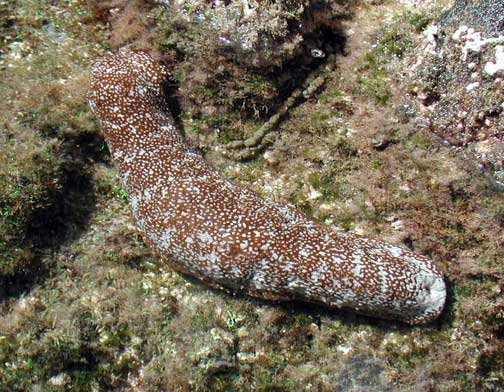
2. n. Sea slug, sea cucumber, beche-de-mer, trepang (Holothuria spp.); for some people an ʻaumakua. See kūkaeloli and saying, ʻīloli. (PPN loli.)

3. vs. Spotted, speckled, daubed; to color in spots, as tapa. Cf. īloli 2.
Loli

Loli

In small kid time loli was sea cucumber. That’s what we called it. But today, for me, loli takes on a whole new meaning (no sea cucumbers in the foothills of Pa’auilo). Loli means to change. Ho’ololi means to cause change. My new mantra this year is: “You must be the change you wish to see in the world,” a quote credited to Mahatma Ghandi.

I want to cause change in the world. Transformation. Loli. And in order to do that I have to loli aspects of myself. As I heard on the Augie T Live Comedy DVD, “Change comes from within”.

In order for me to be the change I want to see in the world, I have to change. Einstein said that no problem can be solved from the same level of consciousness that created it.

We as a people can continue to wallow in our sorrows, relive the trauma, focus on the negativity that surrounds us (and we hear about it everyday…the poor health statitistics, incarceration, uneducated,…) or we can change our level of consciousness, we can be the change. Take care of our health, make better choices, get educated (whatever that may mean to you…and it might mean MORE than just going back to school…it could mean spending time at a lo’i kalo or a loko i’a or going hiking, growing your own food or picking up the rubbish you continuously complain about).

Loli.

He iʻa laka ka loli kaʻe, he loaʻa wale i kāheka – The loli kaʻe is easy enough to gather, for it is found in sea pools (Said of a cross, dissatisfied person who becomes grumpy. A play on kaʻe (grumpy) in loli kaʻe.

He loli ka iʻa, ʻīloli ke aloha – Loli is the sea creature, passionate is the love (an expression used in hana aloha sorcery when loli was secured as an offering).

He palupalu nā hewa liʻiliʻi i ka wā kolo, lolelua i ka wā kamaliʻi, loli ʻole i ka wā ʻoʻo, ʻoni paʻa i ka wā ʻelemakule – Small sins are weak in the creeping stage, changeable in childhood, unchanging when an adult, and firmly fixed in age (Bad habits can be changed in the early stages but eventually become firmly implanted).

Hopu hewa i ka loli, i ka iʻa maka ʻole – Grasped the eyeless fish by m mistake (Met with disappointment. The loli is known as the fish without eyes).

ʻO wahie ka ʻai, ʻo loli ka iʻa, ʻo muku ka imu – Wood is the vegetable food, sea cucumber is the meat, and a small imbue is the only imbue (Said of scarcity from oppression).

Kaupō ʻai loli – Kaupō, land of loli eaters (Kauakahiakua, a chief of Kaupō, Maui, is said to have been fond of loli and to have once build a large imbue for roasting them. Since that time the people of Kaupō have had a reputation for being especially fond of this sea creature).

Copyright: 2015 – Liana Iaea Honda. All rights reserved. All versions of He Momi e Lei ai”, in its entirety, past and present, is the property of L. K. I. Honda. Reproduction and use of any kind other than the sharing of this website is prohibited. Alteration to the original content in any form is prohibited in every and any instance, and use in any other variant is prohibited without written consent of the author. Adress inquiries to: hemomi [at] gmail.com. Definitions and wise sayings are from: Hawaiian Dictionary by Pukui and Elbert, 1986. ʻŌlelo Noʻeau – Hawaiian Proverbs & Poetical Sayings by Mary Kawena Pukui, 1983.

Posted in Uncategorized | Leave a comment

Uluwehi

Lush and beautiful verdure; a place where beautiful plants thrive; festively adorned.

Wehi means to adorned or decorative.  Ulu means to grow.  So literally uluwehi means “decorative growth”.  You hear uluwehi in songs, names, chants.  It is quite a beautiful word, only filled with good and positive feelings.  In fact, all of the uluwehi people I know are WONDERFUL and CHARMING, and definitely a festive adornment no matter where they are.  One of my favorite Uluwehi is a very popular entertainer and adorns himself in pīkake whenever possible.

If something or someone is all uluwehi he is probably all adorned in beautiful greenery.

A variation of uluwehi is uluwehiwehi.  Same meaning. Just a reduplication of wehi.

LANGUAGE LESSON

Uluwehiwehi ʻoe i kaʻu ʻike lā, e ka Royal Hawaiian Hotel – You area so festive to see, O Royal Hawaiian Hotel.

Uluwehiwehi ‘oe Lanikāula – Lanikāula (Kukui grove on Molokaʻi) you are lush lush and beautiful.

Uluwehi ʻo Kaʻala i ka maile me ka palapalai – Kaʻala is adorned in maile

and palapalai.

Copyright: 2015 – Liana Iaea Honda. All rights reserved. All versions of He Momi e Lei ai”, in its entirety, past and present, is the property of L. K. I. Honda. Reproduction and use of any kind other than the sharing of this website is prohibited. Alteration to the original content in any form is prohibited in every and any instance, and use in any other variant is prohibited without written consent of the author. Adress inquiries to: hemomi [at] gmail.com. Definitions and wise sayings are from: Hawaiian Dictionary by Pukui and Elbert, 1986. ʻŌlelo Noʻeau – Hawaiian Proverbs & Poetical Sayings by Mary Kawena Pukui, 1983.

Posted in Uncategorized | Leave a comment